Learn practical, low-cost poultry biosecurity steps small farmers can use to prevent disease outbreaks — footbaths, quarantine, cleaning, and more.Poultry Biosecurity for Small Farms: A Practical Guide to Preventing Disease
Most disease outbreaks on small poultry farms don’t come from bad luck. They come from small, avoidable gaps , a visitor walking straight into the pen, dirty equipment shared between flocks, or wild birds mixing with your chickens at the feed trough. Biosecurity is simply the set of habits that close those gaps before disease has a chance to spread.
Poultry biosecurity for small farms means controlling who and what comes into contact with your birds through clean footwear and hands, isolating new or sick birds, controlling pests, cleaning equipment regularly, and limiting visitor access to reduce the risk of disease entering or spreading through your flock.
Table of Contents
- What Is Poultry Biosecurity?
- Why Biosecurity Matters on Small Farms
- The Three Pillars of Biosecurity
- Daily Biosecurity Practices
- Managing New and Returning Birds
- Visitor and Vehicle Control
- Cleaning and Disinfection
- Pest and Wild Bird Control
- Low-Cost Biosecurity Setup for Beginners
- Warning Signs You’re Cutting Corners
- Frequently Asked Questions
What Is Poultry Biosecurity?
Poultry biosecurity is the combination of practices and procedures used to prevent disease-causing organisms from entering or spreading within a poultry farm.
It covers everything from how you handle visitors and equipment to how you manage new birds, control pests, and clean your poultry house. Biosecurity is not one single action — it’s a system of habits that, together, dramatically reduce the chance of an outbreak.
For small farms, biosecurity is especially important because a single case of disease can spread through an entire flock quickly, given the close proximity birds share in most small-scale housing.
Why Biosecurity Matters on Small Farms
Small and backyard flocks are often assumed to be lower-risk simply because of their size, but the opposite can be true. Small farms frequently have:
- Less formal separation between the farm and the household or neighboring animals.
- More frequent visitor traffic (family, neighbors, buyers).
- Mixed-age flocks, which can mask early symptoms in older, more resistant birds.
- Limited budgets for veterinary support, making prevention more valuable than treatment.
A disease outbreak can wipe out weeks or months of investment in feed, chicks, and labor. Good biosecurity is one of the most cost-effective investments a small poultry farmer can make, because most measures cost little more than consistent effort.
The Three Pillars of Biosecurity
Quick answer: Poultry biosecurity is generally organized around three principles: isolation, traffic control, and sanitation.
| Pillar | What It Means | Example Practice |
|---|---|---|
| Isolation | Keeping birds separated from potential disease sources | Quarantining new birds for 2–3 weeks |
| Traffic Control | Limiting movement of people, vehicles, and equipment onto the farm | Footbaths and restricted visitor access |
| Sanitation | Keeping the environment clean to reduce pathogen buildup | Regular cleaning of feeders, drinkers, and litter |
Most effective biosecurity plans on small farms combine simple versions of all three, rather than focusing heavily on just one.
Daily Biosecurity Practices
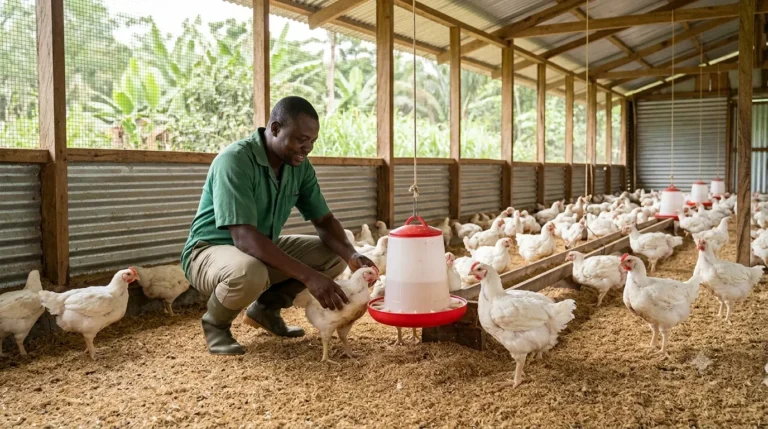
Daily biosecurity on a small farm should include checking birds for signs of illness, washing hands before and after handling birds, keeping feed and water clean, and removing dead birds promptly.
These are habits that should happen every single day, regardless of farm size:
- Morning health checks: Look for lethargy, reduced feed or water intake, abnormal droppings, or respiratory signs like coughing and nasal discharge.
- Clean water daily: Refresh drinkers and clean them regularly to prevent bacterial buildup.
- Prompt removal of dead birds: Dead or dying birds should be removed and disposed of safely and quickly, not left in the pen.
- Separate tools per pen: If you manage more than one flock or pen, avoid sharing feeders, scoops, or equipment between them without cleaning first.
- Hand washing: Wash hands before and after handling birds, especially if you interact with multiple flocks or other people’s birds during the day.
Managing New and Returning Birds
Any new bird brought onto the farm including birds returning from a show, sale, or another location should be quarantined separately from the main flock for at least two to three weeks before mixing.
New birds can carry diseases without showing obvious symptoms right away. A simple quarantine area, even a separate small pen or cage away from the main flock, gives you time to observe the bird’s health before it has contact with the rest of your flock. During quarantine:
- House the new bird in a separate structure, ideally with its own airspace.
- Feed and water the quarantined bird last, after tending to the main flock, or use separate equipment entirely.
- Watch closely for any signs of illness for the full quarantine period.
- Wash hands and change footwear between handling the quarantined bird and the main flock.
Visitor and Vehicle Control
Limit non-essential visitors to the poultry area, and require anyone entering to use a footbath, wear clean protective footwear, and avoid contact with birds from other farms beforehand.
People and vehicles are one of the most common ways disease spreads between farms, especially in areas with many small poultry operations close together. Practical steps include:
- Placing a disinfectant footbath at the entrance of the poultry house.
- Keeping a visitor logbook, especially for anyone who has recently visited another poultry farm.
- Providing dedicated boots or shoe covers for visitors, rather than allowing outside footwear into the pen.
- Avoiding unnecessary vehicle access near housing areas, since tires can carry contaminated soil or droppings from other farms.
Cleaning and Disinfection
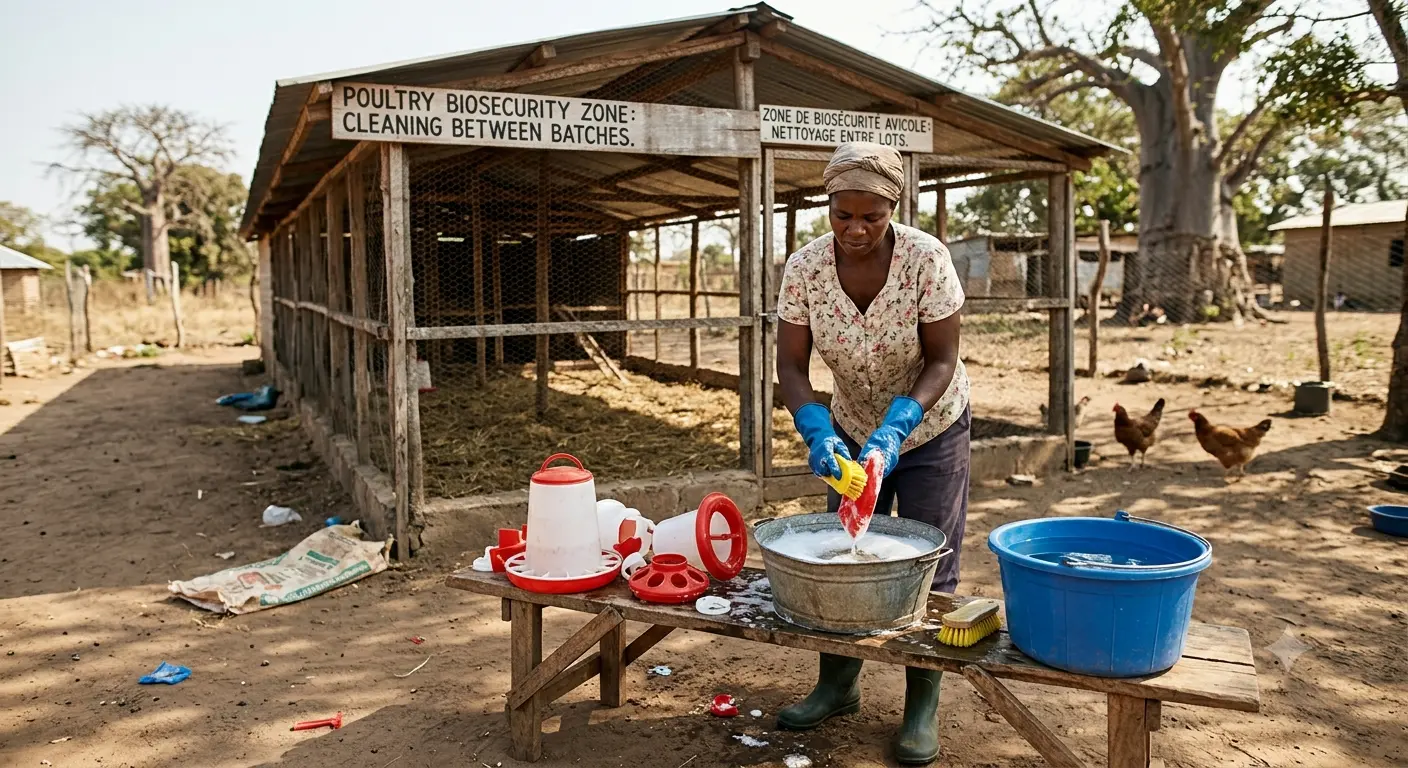
Clean and disinfect feeders, drinkers, and housing between flock batches, and remove all old litter before introducing a new batch of birds.
Cleaning and disinfecting are two different steps, and both matter:
- Cleaning removes visible dirt, droppings, and organic material using water and detergent.
- Disinfecting follows cleaning and uses an appropriate disinfectant to kill remaining pathogens on surfaces.
Disinfectants only work effectively on surfaces that have already been cleaned — applying disinfectant over dirty, organic material significantly reduces its effectiveness. Always follow the product label’s instructions for dilution and contact time, and consult your local agricultural supply store or extension officer for disinfectants approved for poultry use in your country.
Pest and Wild Bird Control
Rodents, wild birds, and insects can all carry and spread poultry diseases, so controlling their access to feed, water, and housing is an important part of biosecurity.
Practical measures include:
- Storing feed in sealed, rodent-proof containers.
- Covering feeders and drinkers where possible to limit access by wild birds.
- Keeping the area around the poultry house free of tall grass, standing water, and waste piles that attract pests.
- Sealing gaps and holes in housing structures that rodents could use to enter.
Low-Cost Biosecurity Setup for Beginners
Effective biosecurity does not require expensive equipment , a footbath, dedicated cleaning tools, a basic quarantine pen, and consistent daily habits cover most of what a small farm needs.
For beginners working with a limited budget, prioritize these low-cost essentials first:
- A simple footbath basin with disinfectant solution at the pen entrance.
- A separate, even makeshift, quarantine space for new or sick birds.
- Dedicated cleaning tools that stay with one pen and are not shared between flocks.
- A basic record of visitor access and any signs of illness observed.
Warning Signs You’re Cutting Corners
Watch for these common signals that biosecurity is slipping on a farm:
- Visitors regularly entering the pen without using a footbath or changing footwear.
- Equipment shared between multiple pens or farms without cleaning.
- New birds mixed into the main flock immediately, without a quarantine period.
- Dead birds left in the pen for hours before removal.
- Feed stored in open containers accessible to rodents or wild birds.
If you notice unusual illness or sudden deaths in your flock, consult a licensed veterinarian or your local agricultural extension office promptly rather than attempting to diagnose or treat the birds yourself.
Frequently Asked Questions
What is the most important biosecurity practice for a small poultry farm?
Controlling who and what comes into contact with your birds through footbaths, restricted visitor access, and quarantining new birds is generally considered the highest-impact biosecurity practice for small farms.
How long should new birds be quarantined?
A quarantine period of two to three weeks is a commonly recommended minimum before introducing new birds to an existing flock.
Do backyard chicken keepers need biosecurity too?
Yes. Backyard flocks are just as vulnerable to disease as commercial flocks, and in some cases more so, due to closer contact with wild birds, pets, and household visitors.
Can biosecurity fully prevent disease outbreaks?
No single measure can guarantee complete protection, but consistent biosecurity practices significantly reduce the risk and severity of outbreaks.
What should I do if I notice sick birds in my flock?
Isolate the affected birds immediately, avoid contact between them and healthy birds, and contact a licensed veterinarian or agricultural extension officer for guidance.
How often should poultry housing be cleaned?
Daily removal of droppings and soiled litter is recommended, with a full clean and disinfection between batches or flock cycles.
Is a footbath really effective against disease?
A properly maintained footbath, used consistently and with fresh disinfectant, is an effective and low-cost way to reduce the risk of pathogens being carried into the poultry house on footwear.
Final Thoughts
Biosecurity is less about one big investment and more about consistent daily habits — cleaning equipment, watching your birds closely, and controlling who and what enters your pen. Start with the low-cost basics: a footbath, a quarantine space, and a daily health check routine. These simple steps, done consistently, are often what separates a farm that avoids major outbreaks from one that doesn’t.
For more on keeping your flock healthy, see our guide on common poultry diseases and how to prevent them].