How to Start a Small Cattle Farm: Step-by-Step Guide
Starting a small cattle farm is one of the most rewarding livestock ventures you can take on, but it also involves real financial risk, physical work, and daily responsibility. Before you buy your first animal, you need a clear plan that covers land, budget, breed selection, housing, health, and markets.
To start a small cattle farm, begin by defining your farming goals, securing enough land and water, budgeting for setup and running costs, choosing a breed suited to your climate and purpose, building basic housing and fencing, buying healthy animals from a reputable source, and setting up a feeding, health, and record-keeping routine before you scale up.
Table of Contents
- Is Starting a Small Cattle Farm Right for You?
- Step 1: Define Your Farming Goals and Production System
- Step 2: Assess Land, Water, and Pasture
- Step 3: Plan Your Startup Budget
- Step 4: Choose the Right Breed
- Step 5: Set Up Housing, Fencing, and Handling Facilities
- Step 6: Buy Your First Cattle
- Step 7: Plan Feeding and Nutrition
- Step 8: Set Up Health and Biosecurity Practices
- Step 9: Set Up Record-Keeping and Management
- Step 10: Understand Your Market Before You Sell
- Common Mistakes Beginners Make
- Frequently Asked Questions
Is Starting a Small Cattle Farm Right for You?
A small cattle farm can work well for you if you have reliable access to land and water, enough time for daily animal care, some starting capital, and a clear reason for raising cattle, whether that is beef production, breeding stock, or a mix of income sources.
Cattle are a long-term commitment. Unlike poultry or small ruminants, beef cattle take months to years to reach a marketable weight, and breeding animals stay productive for several years. Before committing money and land, honestly assess whether you can provide consistent daily care, handle the physical demands of cattle handling, and absorb the financial risk of a slow-growing enterprise.
If you are still comparing cattle farming to other livestock options, it helps to first read a general introduction to beef cattle farming before committing to a startup plan.
Step 1: Define Your Farming Goals and Production System
Decide early whether you want to raise cattle for beef, breeding, dairy-beef dual purpose, or a combination, since this choice affects your land needs, breed selection, budget, and daily workload.
Common small-scale production systems include:
- Cow-calf operation: Keeping breeding cows to produce calves for sale or further raising.
- Stocker or backgrounding: Buying young weaned calves and growing them on pasture before selling.
- Finishing: Feeding cattle to market weight, either on pasture or with supplemental feed.
- Breeding stock production: Raising and selling purebred or crossbred breeding animals.
Most beginners with limited land and capital start smaller, with a cow-calf or stocker system, since these require less infrastructure than a full finishing operation. Your choice here should directly guide the size of land, type of housing, and breed you select in the next steps.
Step 2: Assess Land, Water, and Pasture
Cattle need enough grazing land or a reliable feed supply, plus year-round access to clean water, and the exact land requirement depends heavily on your local climate, pasture quality, and whether you graze or feed cattle in confinement.
Land requirements for cattle vary enormously by region. In areas with high rainfall and productive pasture, one cow may need well under a hectare. In dry or degraded rangeland, the same cow might need several hectares. Rather than relying on a single global figure, speak with your local agricultural extension office or an experienced cattle farmer in your area to estimate a realistic stocking rate for your land.
Key land and water questions to answer before buying cattle:
- Is there enough grazing area, or will you need to buy most of the feed?
- Is there a year-round water source, such as a borehole, dam, river, or piped supply?
- Is the land legally yours to use for livestock, or do you need permission, a lease, or zoning approval?
- Is the terrain safe and accessible for handling cattle and vehicles?
- Are neighboring farms or communities affected by grazing boundaries?
If pasture is limited, many small-scale farmers combine grazing with purchased or home-grown supplementary feed, which shifts more of the discussion into your budget planning.
Step 3: Plan Your Startup Budget
Your startup budget should cover land access or lease costs, fencing and housing, the purchase price of your first animals, feed, veterinary care, water infrastructure, and a cash reserve for the first several months before any income comes in.
Because land prices, cattle prices, feed costs, and veterinary fees vary significantly by country and even by region within a country, this article will not quote specific figures. Instead, build your budget around these major cost categories:
| Cost Category | What It Covers |
|---|---|
| Land and infrastructure | Land purchase or lease, fencing, water points, handling facilities |
| Housing and shelter | Shade structures, night enclosures, calving pens |
| Foundation stock | Purchase price of your first cattle |
| Feed and supplements | Pasture establishment, hay, concentrate feed, mineral supplements |
| Animal health | Vaccinations, deworming, veterinary consultations, emergency treatment |
| Labor | Your own time or hired farm labor |
| Contingency reserve | Unexpected costs, price fluctuations, slow initial income |
For a detailed breakdown of startup and running costs, and how to estimate cattle farm profitability, see our dedicated guide to cattle farm startup costs and profitability.
Step 4: Choose the Right Breed
Choose a cattle breed based on your production goal, local climate, disease resistance needs, and market demand, rather than picking a breed simply because it is popular elsewhere.
Breed selection affects almost everything downstream, including growth rate, heat tolerance, disease resistance, feed efficiency, and the price your cattle will fetch at market. Broadly, breeds fall into a few practical categories for small-scale farmers:
- Heat-tolerant, hardy breeds: Often better suited to hot climates, lower-input systems, and areas with tick-borne disease pressure.
- Fast-growing, high-yield breeds: Often require better nutrition, cooler conditions, and more intensive management to perform well.
- Crossbred cattle: Frequently combine hardiness with improved growth or milk production, and are common on small farms because they balance productivity with resilience.
Rather than duplicating a full breed comparison here, see our complete guide to cattle breeds for beef farming, which compares breed characteristics, strengths, and regional suitability in detail.
Step 5: Set Up Housing, Fencing, and Handling Facilities
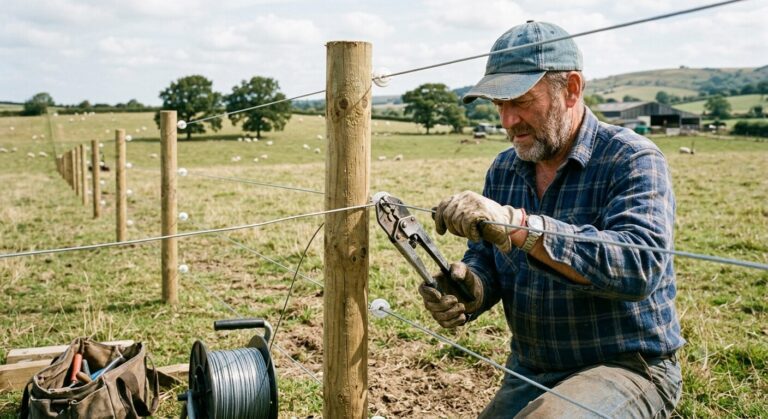
Before bringing cattle onto your land, you need secure perimeter fencing, a basic shelter or shade structure, a reliable water point, and a handling area such as a crush or race for safe restraint and veterinary work.
Even a small herd needs functional infrastructure. At minimum, plan for:
- Perimeter fencing strong enough to contain cattle and keep out predators or theft risks.
- Shade and shelter to protect animals from extreme heat, cold, or heavy rain, depending on your climate.
- A handling facility (crush or race) for safe vaccination, deworming, and general treatment.
- A separate calving or sick-animal pen to isolate animals when needed.
- Reliable water troughs or access points positioned so cattle do not have to walk excessive distances daily.
Poorly planned infrastructure is one of the most common reasons new cattle farmers face injuries, escaped animals, or difficulty administering basic veterinary care. It is worth investing properly in this step before purchasing animals.
Step 6: Buy Your First Cattle
Buy your first cattle from a known, reputable seller, inspect the animals in person for signs of good health, ask for vaccination and health history where available, and avoid buying based on price alone.
When evaluating cattle to purchase, check for:
- Bright, alert eyes and a healthy coat
- Normal breathing, with no coughing or nasal discharge
- Good body condition, without visible lameness
- Normal manure consistency, where observable
- Appropriate age and weight for your production system
Where possible, buy from a seller who can provide vaccination records or health documentation, and consider having a veterinarian inspect animals before purchase, particularly for breeding stock. Avoid mixing newly purchased cattle with an existing herd immediately; a short quarantine period is a basic biosecurity practice covered further in Step 8.
Step 7: Plan Feeding and Nutrition
Cattle need a diet built primarily around quality forage or pasture, supplemented with concentrate feed, clean water, and mineral supplementation appropriate to their production stage.
Your feeding plan should reflect your production system and local feed availability. Broadly:
- Pasture-based systems rely on managed grazing and rotational paddocks to maintain pasture quality year-round.
- Supplemented systems add hay, crop residues, or concentrate feed during dry seasons or growth stages that demand more energy and protein.
- Mineral supplementation is often necessary even on good pasture, since soil and forage mineral content vary by region.
Feed is usually the largest ongoing cost in cattle farming, so match your stocking numbers to what your land and budget can sustainably support, rather than starting with more cattle than you can properly feed.
Step 8: Set Up Health and Biosecurity Practices
Protect your herd with routine vaccination and deworming programs, a quarantine period for new animals, clean water and housing, and a working relationship with a qualified veterinarian, since disease outbreaks are among the biggest risks to a small cattle operation.
Disease prevention is more effective and less costly than treatment. Basic biosecurity practices include:
- Quarantining newly purchased animals before introducing them to the main herd
- Following a vaccination schedule appropriate to your region’s common cattle diseases
- Maintaining a regular deworming and parasite control program
- Keeping housing and water points clean to reduce disease transmission
- Monitoring animals daily for early signs of illness, such as reduced appetite, lethargy, or abnormal behavior
Vaccination schedules, common cattle diseases, and dosage decisions vary by region and by individual animal circumstances. Always consult a licensed veterinarian or your local livestock authority to design a health program suited to your area, rather than relying on generic guidance for medication or treatment decisions.
Step 9: Set Up Record-Keeping and Management
Keep basic records of each animal’s identification, purchase date and price, vaccination history, weight gain, breeding dates, and sales, since accurate records help you track herd health, plan finances, and make better breeding and selling decisions.
Even a simple notebook or spreadsheet is far better than relying on memory. At minimum, track:
- Individual animal identification (ear tags or another marking system)
- Purchase and sale dates, weights, and prices
- Vaccination and treatment history
- Breeding and calving dates, where applicable
- Feed costs and consumption patterns
Good records also make it easier to calculate your actual cost of production and profitability over time, which is essential once you move beyond the first year of operation.
Step 10: Understand Your Market Before You Sell
Research local buyers, abattoirs, livestock markets, or breeding stock buyers before you start raising cattle, so your breed, finishing weight, and timing match what buyers in your area actually want to pay for.
Many new farmers focus heavily on raising cattle but plan their market too late. Before you commit to a breed or production system, find out:
- Where local farmers currently sell cattle: auctions, abattoirs, private buyers, or export markets
- What weight, age, or breed characteristics buyers prefer in your area
- Seasonal price patterns, if any exist in your region
- Whether there is demand for breeding stock, not just slaughter animals
Understanding beef demand at a broader level can also help you see where your local market fits into the bigger picture. For context on global beef production trends, see our article on the top beef-producing countries in the world.
Common Mistakes Beginners Make
Several mistakes appear repeatedly among new small-scale cattle farmers:
- Buying cattle before infrastructure is ready. This often leads to injuries, escapes, or poor handling conditions.
- Overstocking land. Too many animals on too little pasture leads to poor growth and land degradation.
- Skipping quarantine for new animals. This significantly increases disease risk to the whole herd.
- Underestimating feed costs, especially during dry seasons or feed shortages.
- Starting without a market plan, which can leave farmers with animals they cannot sell profitably.
- Ignoring record-keeping, which makes it difficult to track profitability or herd performance.
Frequently Asked Questions
How many cattle should a beginner start with?
Most beginners start small, often with just a few animals, so they can learn daily management, handling, and health care before scaling up. The right number depends on your available land, water, budget, and time, so it is best determined case by case rather than following a fixed rule.
How much land do I need to start a small cattle farm?
Land requirements vary widely depending on climate, pasture quality, and whether you supplement grazing with purchased feed. A local agricultural extension officer or experienced regional farmer can give you a realistic stocking estimate for your specific land.
Can I start a cattle farm with no experience?
Yes, but it is strongly recommended to gain hands-on experience first, whether by working with an experienced farmer, taking a livestock training course, or starting with a very small number of animals while you learn.
Do I need a veterinarian for a small cattle farm?
Yes. Even small herds benefit from a working relationship with a veterinarian for vaccinations, health checks, and emergency treatment. Routine care can often be planned in advance, but professional guidance is important for disease control and treatment decisions.
What is the fastest way to start losing money in cattle farming?
Common ways new farmers lose money include overstocking land, underestimating feed and health costs, buying poor-quality or sick animals, and starting without a clear market for selling cattle.
Is beef cattle farming profitable for small-scale farmers?
Profitability depends on your costs, market access, production system, and management practices. It is achievable at small scale, but it requires careful budgeting and realistic expectations, not just enthusiasm for raising animals.
Should I start with breeding cows or growing cattle for sale?
This depends on your goals and capital. Buying weaned calves to grow and sell can generate income faster, while building a breeding herd is a longer-term investment that produces ongoing calves once established.
Conclusion
Starting a small cattle farm is a step-by-step process, not a single decision. Getting your land, budget, breed, infrastructure, and health practices right before you buy your first animal will save you money and stress later. Take the time to plan realistically for your specific region and resources, start small enough to learn properly, and grow your herd as your experience and infrastructure allow.
If you are still deciding whether cattle farming fits your goals, or want a broader introduction to the industry, start with our guide to beef cattle farming for beginners. Once your farm is running, our guide to cattle farm startup costs and profitability can help you plan your finances in more detail.