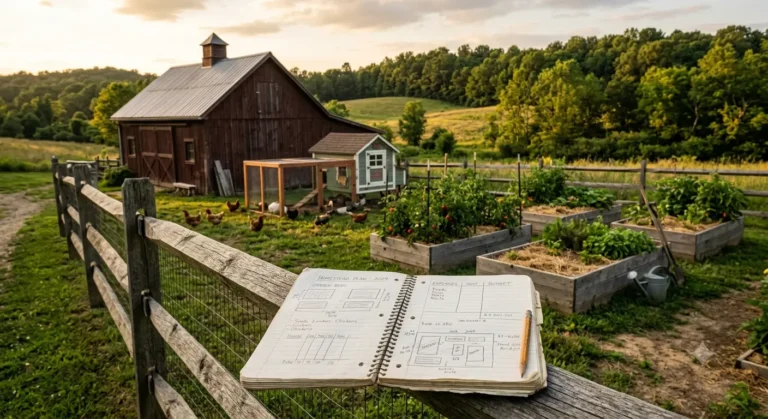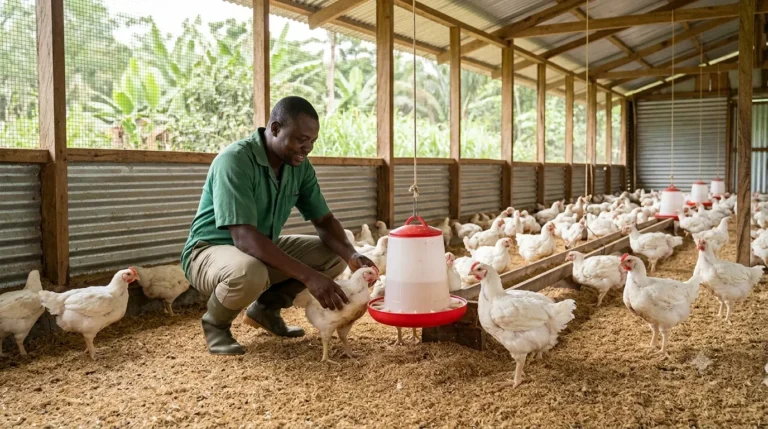
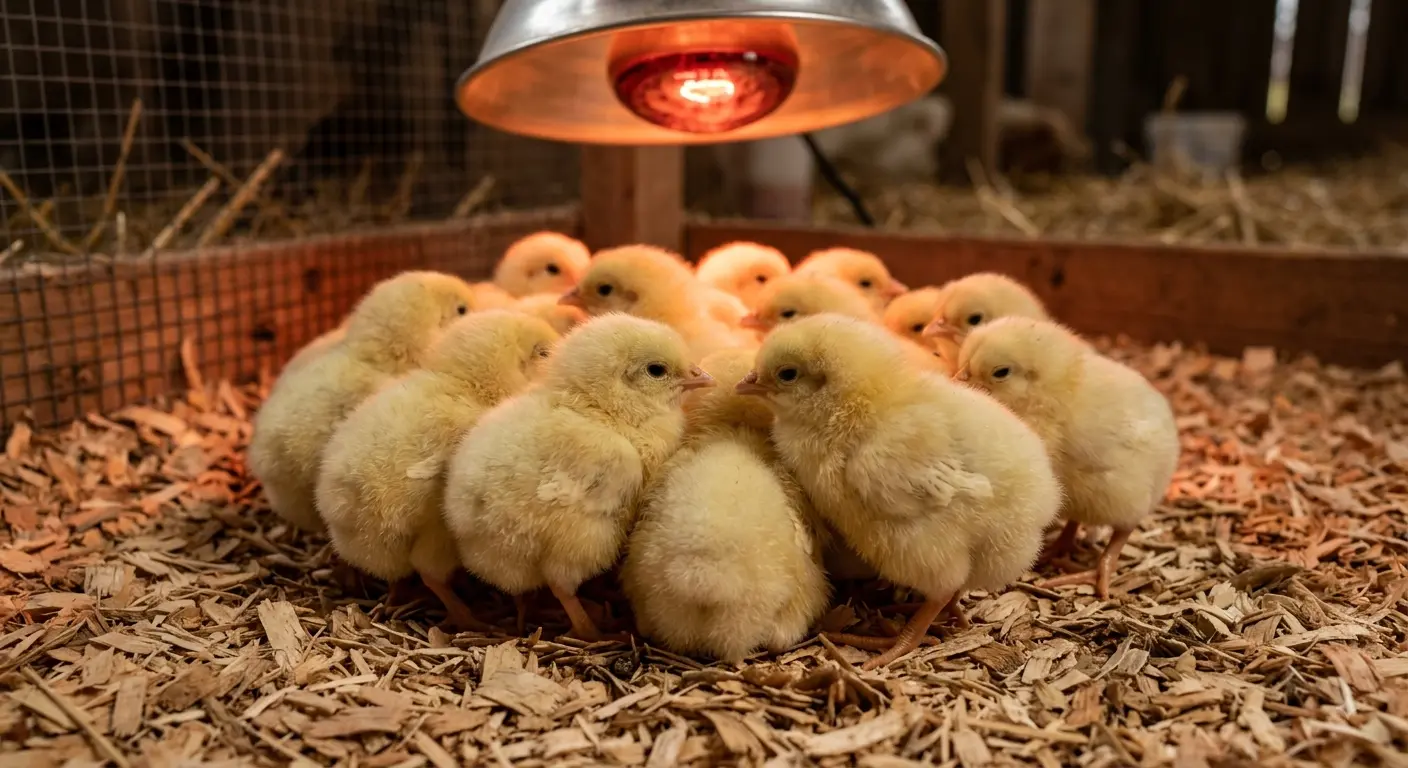
Small deep litter poultry house for beginner farmersComplete Poultry Farming Guide for Beginners
Starting a poultry farm can feel overwhelming when you don’t know where to begin. Between choosing the right breed, building housing, sourcing feed, and preventing disease, new farmers often make costly mistakes in their first few months. This guide walks you through every stage of starting and running a small poultry farm, with practical steps that work whether you’re raising 20 backyard birds or planning a 500-bird commercial flock.
Quick answer: Poultry farming for beginners involves choosing a suitable breed (layers, broilers, or dual-purpose), building secure housing with good ventilation, sourcing day-old chicks or point-of-lay birds from a reputable hatchery, providing balanced feed and clean water, following a vaccination schedule, and maintaining strict biosecurity to prevent disease. Most beginners start small — 50 to 100 birds — before scaling up.
Table of Contents
- Getting Started: What You Need Before Day One
- Choosing Your Poultry Farming Purpose
- Choosing the Right Chicken Breed
- Building Poultry Housing
- Feeding Your Flock
- Health, Vaccination, and Biosecurity
- Daily and Weekly Management Routine
- Startup Costs and Budgeting
- Is Poultry Farming Profitable?
- Common Mistakes Beginners Make
- Frequently Asked Questions
Getting Started: What You Need Before Day One
Quick answer: Before buying a single chick, you need a clear plan covering your farming purpose (eggs, meat, or both), a suitable location, housing, a reliable source of chicks, starter capital, and knowledge of local regulations.
Many new farmers buy chicks first and figure out the rest later. This almost always leads to overcrowding, disease outbreaks, or running out of feed money mid-cycle. Take these steps in order:
- Decide your farming purpose (covered in the next section).
- Choose a location with good drainage, away from residential noise complaints, and with road access for feed delivery.
- Check local zoning rules, municipal permits, and any livestock registration requirements in your area, since these vary by country and even by district.
- Build or prepare housing before chicks arrive — never buy birds and then rush housing afterward.
- Identify a reputable hatchery or breeder near you.
- Set aside a feed and medication budget for at least the first 8 weeks.
Choosing Your Poultry Farming Purpose
Quick answer: The three main paths in poultry farming are egg production (layers), meat production (broilers), and dual-purpose or indigenous breeds that provide both. Your choice affects everything from housing design to feed formulation.
| Purpose | Typical Timeline | Best For |
|---|---|---|
| Layers (eggs) | Start laying at 18–20 weeks; productive for 12–18 months | Steady monthly income, local egg markets |
| Broilers (meat) | Ready for sale in 6–8 weeks | Faster cash cycles, festive season demand |
| Dual-purpose/indigenous | Slower growth, lower egg output | Low-input backyard systems, local taste preference |
Broilers give you faster returns but require tighter feed management, since a poorly fed broiler batch loses money quickly. Layers demand more patience but reward you with a longer income stream once birds start laying. Many beginners in Africa start with a small layer flock because eggs sell steadily in local markets and don’t require slaughter or cold storage.
Choosing the Right Chicken Breed
Quick answer: Popular layer breeds include ISA Brown, Lohmann Brown, and Hy-Line; popular broiler breeds include Cobb 500 and Ross 308; indigenous and dual-purpose breeds like Kuroiler and local ecotypes suit low-input, free-range systems.
Layer Breeds
- ISA Brown — reliable egg production, calm temperament, widely available from commercial hatcheries.
- Lohmann Brown — hardy, adapts well to varied climates.
- Hy-Line — consistent shell quality, favored by commercial layer farms.
Broiler Breeds
- Cobb 500 — fast growth rate, efficient feed conversion.
- Ross 308 — similar growth performance, common in commercial operations.
Dual-Purpose and Indigenous Breeds
- Kuroiler — bred for both eggs and meat, tolerant of free-range conditions.
- Local ecotypes — naturally disease-resistant in their home region but slower to grow and lay; often preferred where commercial feed is expensive or hard to source.
Availability of specific breeds varies significantly by country and region, so confirm what a certified local hatchery actually stocks before planning around a breed that may not be accessible near you.
Building Poultry Housing
Quick answer: Poultry housing must provide protection from predators and weather, good ventilation, adequate space (roughly 0.09–0.1 square meters per bird for layers on deep litter, more for broilers), clean bedding, and easy access for daily management.
Space Requirements
| System | Space per Bird | Notes |
|---|---|---|
| Deep litter (layers) | ~0.09–0.1 m² | Requires regular litter turning to control ammonia |
| Battery cage (layers) | ~450–550 cm² per bird | Easier egg collection, requires more capital |
| Broiler floor housing | ~0.06–0.08 m² (varies with age) | Space needs increase as birds grow |
| Free-range | Housing for roosting only | Requires secure fencing and predator control |
Key Housing Features
- Ventilation — poor airflow causes respiratory disease and heat stress; use windows or mesh screening on opposite walls.
- Roofing — must keep out rain while allowing hot air to escape.
- Flooring — concrete floors are easiest to clean and disinfect; earth floors need thicker litter and more frequent replacement.
- Predator-proofing — secure wire mesh, solid doors, and no gaps at ground level to keep out rodents, snakes, and wild animals.
- Litter — wood shavings, rice husks, or dried straw, kept dry and turned regularly.
For readers interested in the details of housing design, see our guide on [Suggested Internal Link: How to Build a Low-Cost Poultry House].
eding”>Feeding Your Flock
<strong>Quick answer: Chickens need different feed formulations at each growth stage: chick starter (0–8 weeks), grower feed (8–18 weeks for layers, or finisher feed for broilers), and layer feed (from point of lay onward), always alongside constant access to clean water.
Feeding Stages
- Starter feed (0–8 weeks): High protein (around 20–22%) to support rapid early growth.
- Grower feed (8–18 weeks for layers): Slightly lower protein, supports frame development before laying begins.
- Layer feed (from ~18–20 weeks): Higher calcium content to support eggshell formation.
- Broiler finisher feed (from ~4 weeks to slaughter): Formulated for rapid weight gain in the final weeks.
Feed typically accounts for 60–70% of total production costs, so poor feed management is the fastest way to lose money in poultry farming. Buy from a supplier you trust, store feed in a dry, rodent-proof area, and never feed moldy or contaminated feed — it can cause serious illness or death in the flock. Clean, fresh water should be available at all times, since dehydration reduces both growth and egg production quickly.
For a full breakdown of feed formulation and homemade feed options, see our guide on [Suggested Internal Link: Poultry Feed Formulation for Small-Scale Farmers].
Health, Vaccination, and Biosecurity
Quick answer: Prevent disease through routine vaccination (especially against Newcastle disease and Gumboro), strict farm hygiene, quarantine of new birds, and prompt veterinary consultation when birds show signs of illness.
Common Poultry Diseases to Watch For
- Newcastle disease — highly contagious viral disease; vaccination is the primary prevention method in many regions.
- Infectious bursal disease (Gumboro) — affects young chicks’ immune systems.
- Coccidiosis — parasitic disease linked to damp litter and poor sanitation.
- Fowl typhoid and other bacterial infections — spread through contaminated water, feed, or equipment.
Vaccination schedules differ by region, disease pressure, and chicken breed, so work with a local veterinarian or livestock extension officer to set up a schedule appropriate for your area rather than copying a generic timetable found online.
Basic Biosecurity Practices
- Limit visitor access to the poultry house.
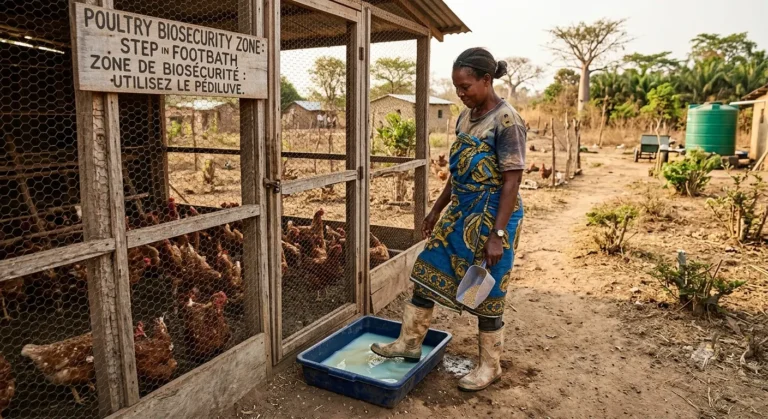
- Disinfect footwear and equipment before entering the coop.
- Quarantine new birds for at least two weeks before introducing them to the flock.
- Remove sick or dead birds immediately and isolate the rest of the flock if disease is suspected.
- Keep wild birds and rodents away from feed and water sources.
Never attempt to diagnose or treat serious illness without professional guidance, and avoid administering medications or vaccines without proper storage, dosage, and handling knowledge. Always consult a qualified veterinarian or agricultural extension officer for disease outbreaks or medication use.
Daily and Weekly Management Routine
Quick answer: A basic poultry routine includes twice-daily feeding and watering checks, daily health observation, regular litter management, and weekly record-keeping of feed use, mortality, and egg or weight yields.
Daily Tasks
- Check feed and water levels morning and evening.
- Observe birds for signs of illness (lethargy, ruffled feathers, reduced feed intake).
- Collect eggs at least twice a day if raising layers.
- Remove wet litter and droppings buildup.
Weekly Tasks
- Record feed consumption, mortality, and production figures.
- Weigh a sample of birds (for broilers) to track growth against targets.
- Inspect housing for damage or predator entry points.
- Clean and disinfect waterers and feeders.
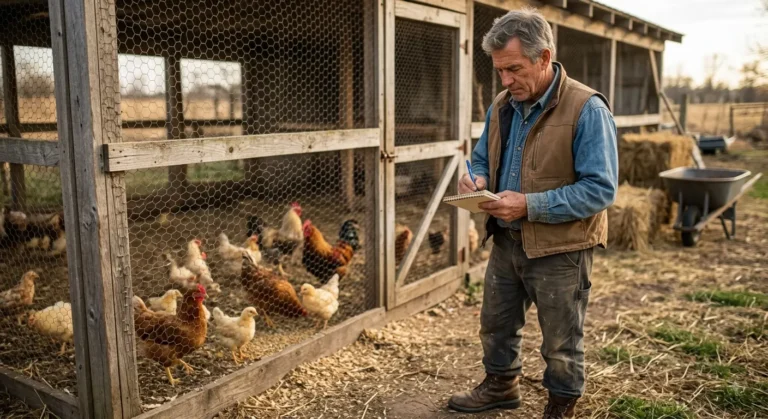
Keeping simple written or spreadsheet records from day one makes it far easier to spot problems early and calculate real profitability at the end of each cycle.
Startup Costs and Budgeting
Quick answer: Startup costs depend heavily on flock size, housing type, and country, but generally include housing construction, day-old chicks, feed, vaccines, feeders and drinkers, and lighting — with feed being the largest recurring expense.
| Cost Category | Notes |
|---|---|
| Housing | One-time cost; varies widely by materials and size |
| Day-old chicks | Price varies by breed and hatchery; buy from certified sources only |
| Feed | Largest ongoing cost; budget through to first sales or first egg cycle |
| Vaccines and medication | Relatively low cost but essential; skipping this increases mortality risk |
| Feeders, drinkers, lighting | Reusable equipment; moderate one-time investment |
| Labor | Often the farmer’s own time in small operations |
Because exact prices vary significantly by country, currency, and supplier, get local quotes from hatcheries, feed mills, and agro-vet shops before finalizing your budget, rather than relying on generic figures from unrelated regions.
Is Poultry Farming Profitable?
Quick answer: Poultry farming can be profitable, especially for layers with steady local egg demand and broilers timed around high-demand periods, but profitability depends on controlling feed costs, minimizing mortality, and securing reliable buyers.
New farmers often underestimate two things: feed conversion efficiency and mortality risk. A flock with high mortality in the first few weeks can erase profit margins even if egg or meat prices are favorable. Building relationships with local buyers — markets, restaurants, or bulk purchasers — before your birds are ready to sell also reduces the risk of unsold stock.
Start with a manageable flock size you can fully monitor, then scale up gradually once you understand your local costs, mortality patterns, and market demand.
Common Mistakes Beginners Make
- Buying chicks before housing is ready — leads to overcrowding and stress.
- Skipping vaccinations — a single disease outbreak can wipe out an entire flock.
- Underestimating feed costs — running out of feed budget mid-cycle forces poor substitutions.
- Poor ventilation — increases respiratory disease and heat stress.
- No quarantine for new birds — introduces disease risk to an otherwise healthy flock.
- No record-keeping — makes it impossible to identify what’s actually costing money.
Frequently Asked Questions
How many chickens should a beginner start with?
Most beginners start with 50 to 100 birds, a number small enough to manage closely while still being large enough to learn realistic feeding, health, and record-keeping routines before scaling up.
How much space do chickens need?
Layers on deep litter generally need about 0.09–0.1 square meters per bird, while broilers need slightly less per bird but require more space as they grow toward market weight. Free-range systems need less indoor space but require secure outdoor fencing.
What is the best chicken breed for beginners?
ISA Brown and Lohmann Brown are popular choices for beginner layer flocks because of their reliable egg production and hardy nature. For meat production, Cobb 500 and Ross 308 are common commercial broiler breeds. Local conditions and hatchery availability should guide the final choice.
How long does it take for chickens to start laying eggs?
Most commercial layer breeds begin laying between 18 and 20 weeks of age, with egg production gradually increasing to peak output over the following weeks.
How long does it take to raise broilers for market?
Commercial broiler breeds like Cobb 500 and Ross 308 are typically ready for market at 6 to 8 weeks, depending on feed quality, management, and target weight.
What vaccines do chickens need?
Common vaccinations include protection against Newcastle disease and infectious bursal disease (Gumboro), though exact schedules vary by region and disease pressure. Consult a local veterinarian or livestock extension officer for a vaccination plan suited to your area.
Can I start poultry farming with little capital?
Yes, many farmers start small with a modest flock, simple low-cost housing, and gradual reinvestment of early profits into expansion, rather than borrowing heavily for a large operation from day one.
Do I need a license to start a poultry farm?
Requirements vary by country and local municipality. Check with your local agricultural or livestock authority regarding zoning, permits, and registration before starting, since regulations differ significantly between regions.
Conclusion
Poultry farming rewards preparation more than ambition. Beginners who succeed are usually the ones who start small, secure proper housing before buying chicks, follow a consistent feeding and vaccination routine, and keep honest records from the first week. Mistakes in the first flock are common — the goal is to make them on a small, manageable scale rather than after a large investment.