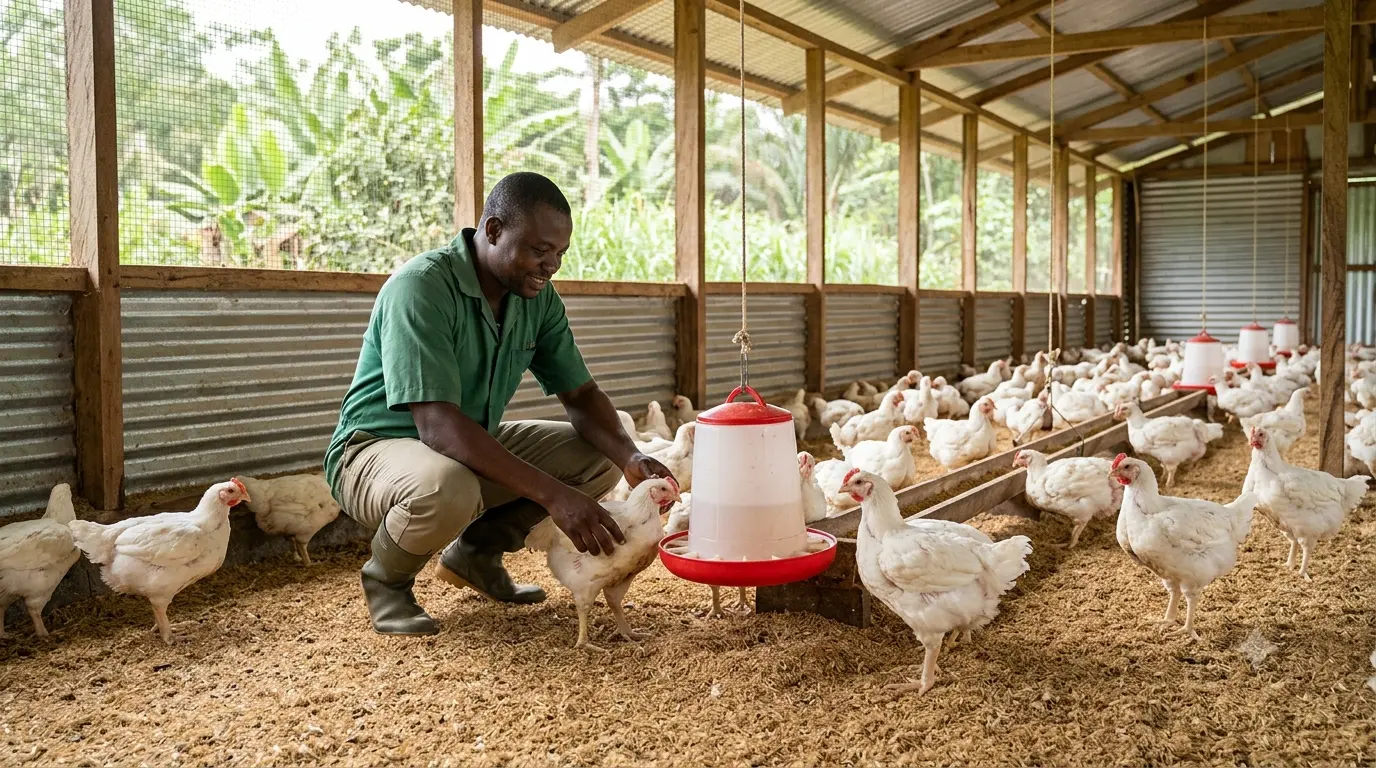
Broiler Farming for Beginners: A Practical Step-by-Step Guide
Starting a broiler farm can feel overwhelming when you don’t know where to begin. Which breed should you raise? How much space do you need? What will it cost, and how soon can you expect a return? This guide answers those questions in plain language, based on practices that work for small and medium-scale broiler farmers across Nigeria, Ghana, Cameroon, Kenya, Uganda, and other parts of Sub-Saharan Africa.
Broiler farming for beginners involves choosing a fast-growing broiler breed, setting up a clean and well-ventilated poultry house, sourcing day-old chicks from a reputable hatchery, feeding a proper starter-to-finisher feeding program, and managing temperature, water, and biosecurity carefully for 6 to 8 weeks until the birds reach market weight.
Table of Contents
- What Is Broiler Farming?
- Why Start a Broiler Farm?
- Choosing the Right Broiler Breed
- Housing and Space Requirements
- Essential Equipment
- Sourcing and Receiving Day-Old Chicks
- Feeding Program for Broilers
- Health, Vaccination, and Biosecurity
- Broiler Growth Timeline
- Startup Costs and Budgeting
- Marketing and Selling Your Broilers
- Common Beginner Mistakes to Avoid
- Frequently Asked Questions
What Is Broiler Farming?
Quick answer: Broiler farming is the practice of raising chickens specifically bred for fast meat production, typically ready for sale within 6 to 8 weeks of hatching.
Unlike layers, which are raised for egg production over a year or more, broilers are raised for a short, intensive cycle focused entirely on weight gain. This makes broiler farming attractive to beginners because you see results quickly and can turn over multiple batches in a single year.
Broiler production is a core part of the poultry farming sector across West, East, and Central Africa, feeding growing urban demand for affordable chicken meat.
Why Start a Broiler Farm?
Broiler farming appeals to beginners for several practical reasons:
- Short production cycle: Most batches are ready for market in 6 to 8 weeks.
- Low entry barrier: You can start small, with as few as 50 to 100 birds, and scale up as you gain experience.
- Consistent local demand: Chicken meat is a staple protein source in most African households, restaurants, and event catering.
- Flexible investment size: Startup costs vary widely depending on scale, so beginners can start within a modest budget.
That said, broiler farming also carries real risks — disease outbreaks, feed price fluctuations, and market gluts can all affect profitability. Treat it as a business that requires planning, not a guaranteed quick-profit venture.
Choosing the Right Broiler Breed
Quick answer: The Cobb 500 and Ross 308 are the most widely used commercial broiler breeds in Africa because of their fast growth rate, efficient feed conversion, and wide availability through regional hatcheries.
Both breeds are hybrid strains developed specifically for meat production. They typically reach a market weight of 1.8 to 2.5 kg within 6 to 8 weeks under good management.
| Breed | Growth Rate | Feed Conversion | Availability in Africa |
|---|---|---|---|
| Cobb 500 | Very fast | Efficient | Widely available |
| Ross 308 | Very fast | Efficient | Widely available |
| Local/crossbreeds | Slower | Less efficient | Regionally variable |
Buy day-old chicks only from hatcheries with a good reputation for healthy, disease-free stock. Ask other local farmers or agricultural extension officers for recommendations before choosing a supplier.
Housing and Space Requirements
Quick answer: Allow roughly 10 to 12 birds per square metre of floor space for deep litter systems, with good cross-ventilation, a raised floor to prevent dampness, and enough roof overhang to keep out rain.
Your poultry house does not need to be expensive, but it must protect the birds from predators, rain, and extreme heat while allowing enough airflow to prevent ammonia buildup from droppings. Key housing considerations include:
- Orientation: Position the house to take advantage of prevailing winds for natural ventilation.
- Flooring: A concrete or well-compacted earth floor covered with 5–10 cm of wood shavings, rice husks, or dry sawdust (litter) works well.
- Walls: Half-walled with wire mesh above allows airflow while keeping predators out.
- Roofing: Ensure enough height and insulation to reduce heat stress, especially in hot climates.
- Brooding area: Set aside a separate, enclosed section for chicks during their first 2–3 weeks, where temperature can be more tightly controlled.
For readers planning their structure in detail, see our guide on [Suggested Internal Link: How to Build a Low-Cost Poultry House].
Essential Equipment
Quick answer: Beginners need a brooder heat source, feeders, drinkers, litter material, and basic biosecurity supplies such as foot dips and hand-washing stations.
- Brooder/heat source: Charcoal brooders, infrared bulbs, or gas brooders to keep chicks warm during their first weeks.
- Feeders: Trough or tube feeders sized appropriately for chick, grower, and finisher stages.
- Drinkers: Clean, easily refillable drinkers; automatic nipple drinkers reduce water contamination as birds grow.
- Litter material: Wood shavings, rice husks, or dry straw.
- Thermometer: To monitor brooder temperature accurately rather than guessing.
- Weighing scale: To track growth and adjust feeding.
- Biosecurity supplies: Foot dips, protective clothing, and hand-washing stations at the entrance of the pen.
Sourcing and Receiving Day-Old Chicks
Quick answer: Order day-old chicks from a certified hatchery, prepare the brooder at least 24 hours before arrival, and maintain a brooder temperature of around 32–35°C for the first week, reducing gradually each week.
When chicks arrive, check that they are active, have clean fluffy down, and show no signs of pasty vent (droppings stuck to the vent area) or weakness. Provide clean water with a small amount of glucose or an approved electrolyte solution on arrival to help them recover from transport stress.
| Chick Age | Brooder Temperature |
|---|---|
| Week 1 | 32–35°C |
| Week 2 | 29–32°C |
| Week 3 | 26–29°C |
| Week 4 onward | 21–24°C (or ambient, if warm climate) |
Overcrowding or chilling during this early stage is one of the leading causes of early chick mortality, so monitor behaviour closely: chicks huddling together signal they are too cold, while chicks spread far from the heat source signal they are too hot.
Feeding Program for Broilers
Quick answer: Broilers are typically fed a starter feed (0–2 weeks), grower feed (2–4 weeks), and finisher feed (4 weeks to market), each formulated with progressively different protein and energy levels to match the bird’s growth stage.
Feed usually represents 60–70% of total production costs, so getting the feeding program right directly affects profitability.
- Starter feed: Higher protein content (around 22–23%) to support rapid early development.
- Grower feed: Slightly lower protein (around 20%), supporting continued muscle growth.
- Finisher feed: Formulated for weight gain in the final weeks before sale.
Always provide clean, fresh drinking water at all times — broilers drink roughly twice as much water as the feed they consume by weight, and dehydration quickly slows growth. Buy feed from reputable manufacturers or feed mills, and store it in a dry, rodent-proof area to prevent mold growth and nutrient loss.
Health, Vaccination, and Biosecurity
Quick answer: Follow a basic vaccination schedule against Newcastle disease and Gumboro disease (infectious bursal disease), maintain strict biosecurity, and consult a licensed veterinary or agricultural extension officer for any vaccination or treatment protocol suited to your specific region.
Disease is one of the biggest threats to a beginner’s broiler flock. Basic biosecurity practices that reduce risk include:
- Restricting visitor access to the poultry house.
- Disinfecting footwear before entering the pen.
- Isolating new or sick birds immediately.
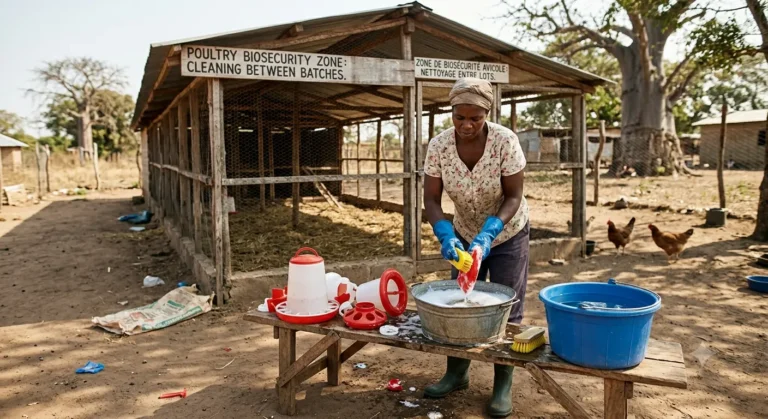
- Cleaning and disinfecting the house thoroughly between batches.
- Controlling rodents and wild birds around the farm.
Vaccination schedules vary by country and by the specific disease pressures in your region. Do not attempt to self-administer vaccines or medications without guidance — always consult a qualified veterinarian or your local agricultural extension office to get a schedule appropriate for your area.
Broiler Growth Timeline
Quick answer: Under good management, broilers reach market weight of about 1.8–2.5 kg within 6 to 8 weeks, though exact timing depends on breed, feed quality, and climate.
| Week | Key Focus |
|---|---|
| 1–2 | Brooding, warmth, starter feed |
| 2–4 | Grower feed, increasing space allowance |
| 4–6 | Finisher feed, weight monitoring |
| 6–8 | Final weight gain, preparation for sale |
Startup Costs and Budgeting
Quick answer: Startup costs vary significantly by scale and country, but beginners typically need to budget for chicks, feed, housing, equipment, vaccines, and utilities before their first batch generates income.
Rather than quoting fixed figures that vary by country and change with inflation, beginners should build a simple budget covering these categories:
- Day-old chicks (cost per bird × number of birds)
- Feed for the full 6–8 week cycle
- Housing construction or rental
- Equipment (feeders, drinkers, brooder, litter)
- Vaccines and basic medication
- Utilities (water, electricity or fuel for brooding)
- Labor, if hiring help
- A contingency buffer of at least 10–15% for unexpected costs
Get current local prices for chicks and feed from suppliers in your area before finalizing your budget, since these costs change frequently and vary by country and season.
Marketing and Selling Your Broilers
Quick answer: Identify buyers before your birds are ready — local markets, restaurants, hotels, event caterers, and individual households are the most common outlets for small-scale broiler farmers.
Selling live or dressed birds depends on local demand and regulations. Building relationships with regular buyers, such as local eateries or event planners, can provide more predictable income than relying solely on open market sales. Timing your batches around high-demand periods, such as festive seasons, can also improve returns.
Common Beginner Mistakes to Avoid
- Overcrowding the pen: Leads to stress, disease spread, and poor growth.
- Inconsistent feeding: Irregular feed availability slows weight gain.
- Poor brooder temperature control: A major cause of early chick mortality.
- Weak biosecurity: Allowing visitors or contaminated equipment into the pen increases disease risk.
- No market plan: Waiting until birds are ready before looking for buyers.
- Buying chicks from unverified sources: Increases the risk of disease and poor genetics.
Frequently Asked Questions
How long does it take to raise broilers to market weight?
Most broilers reach market weight within 6 to 8 weeks, depending on the breed, feed quality, and management practices.
How many broilers should a beginner start with?
Many beginners start with 50 to 100 birds to learn the process on a manageable scale before expanding to larger batches.
What is the best broiler breed for beginners in Africa?
Cobb 500 and Ross 308 are the most widely available and reliable commercial broiler breeds across Sub-Saharan Africa.
Do broilers need vaccination?
Yes. Broilers typically need vaccination against diseases such as Newcastle disease and Gumboro disease. Consult a local veterinarian or agricultural extension officer for a schedule suited to your region.
How much space do broilers need?
A general guideline is about 10 to 12 birds per square metre in a deep litter system, adjusted for climate and ventilation.
Is broiler farming profitable for beginners?
Broiler farming can be profitable, but returns depend on feed costs, disease management, and having reliable buyers lined up before your birds are ready for sale. It is not a guaranteed quick-profit business.
What do broiler chickens eat?
Broilers are fed a starter feed in their first two weeks, a grower feed from weeks two to four, and a finisher feed from four weeks until market, each formulated for their growth stage.
Can I raise broilers at home on a small scale?
Yes, many beginners start with a small backyard setup of 50 or fewer birds before scaling into a dedicated poultry house.
Final Thoughts
Broiler farming rewards beginners who prepare well before their first batch of chicks arrives. Focus on getting your housing, feeding program, and biosecurity right from day one, and line up buyers before your birds reach market weight. Start small, learn from your first cycle, and use those lessons to scale up with confidence.