Best Quail Breeds for Meat Production
When most people think about quail, eggs usually come to mind first, those tiny speckled gems that show up in gourmet recipes and backyard breakfast tables. But there’s a whole side of quail farming that doesn’t get nearly enough attention: meat production. And honestly, once you’ve tried a properly raised meat-line quail on the grill, you start to understand why more farmers are paying attention to this side of the business.
Not every quail breed is built for the table, though. Some are bred almost exclusively for egg output, with small, lean bodies that don’t carry much meat. Others have been specifically developed over generations for size, growth rate, and breast meat yield. Choosing the right breed from the start can be the difference between a frustrating, low-yield operation and a genuinely profitable meat enterprise.
Let’s go through the breeds that actually make sense if meat is your primary goal.
Table of Contents
- 1. Jumbo Coturnix (Jumbo Brown)
- 2. Texas A&M White Quail
- 3. Pharaoh Coturnix
- 4. Manchurian Golden Quail
- 5. Bobwhite Quail (Meat-Focused Lines)
- Quick Comparison Table
- How to Choose the Right Breed for Your Setup
- Tips for Raising Quail for Meat
- Frequently Asked Questions
1. Jumbo Coturnix (Jumbo Brown)
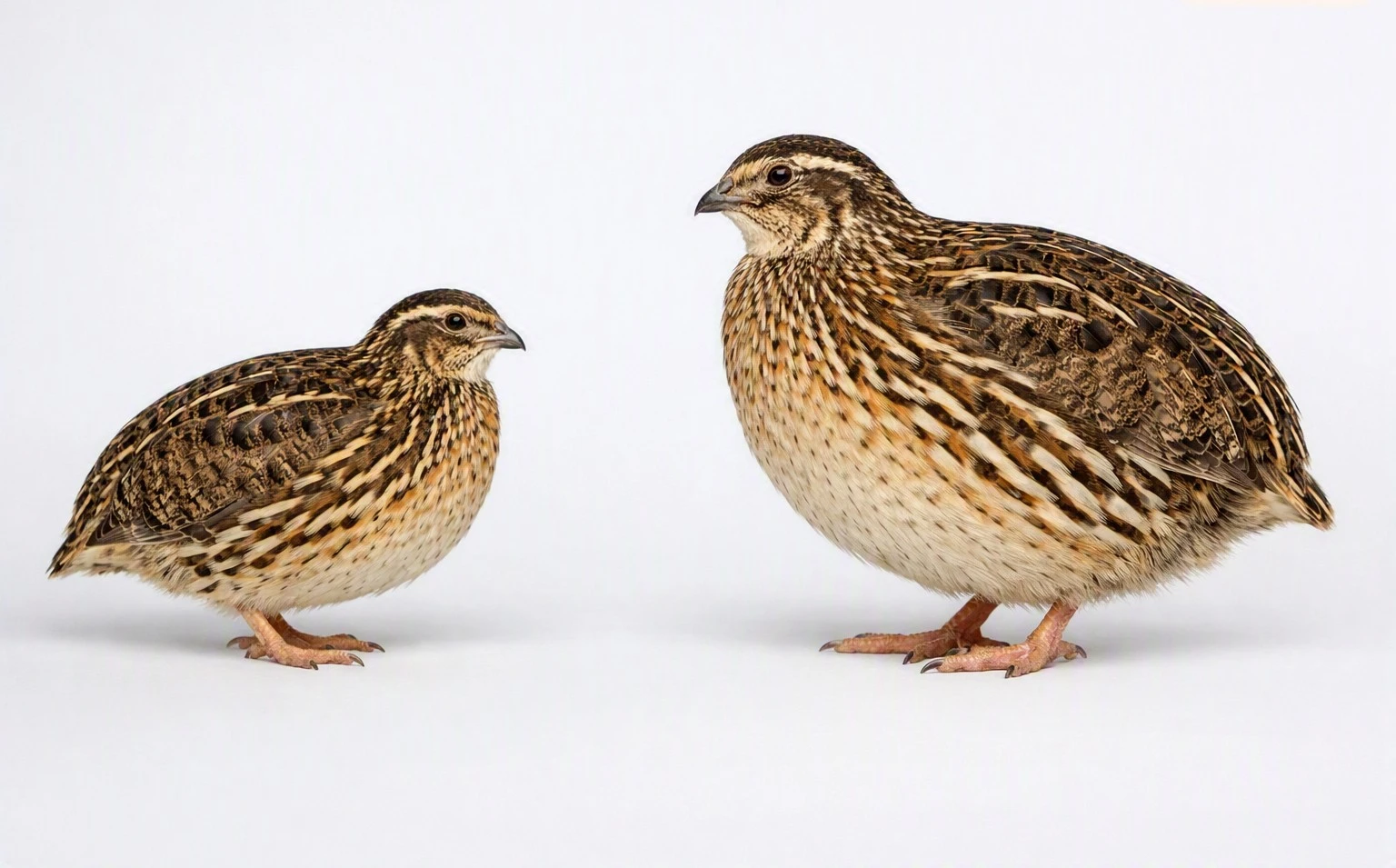
If you ask any experienced meat-quail farmer where to start, Jumbo Coturnix is almost always the answer. This is essentially the standard Coturnix breed selectively bred over generations for larger body size and faster weight gain, while still retaining the speed and adaptability that made Coturnix popular in the first place.
Jumbo Coturnix typically reach 250-300 grams at market weight by around 6-8 weeks, noticeably heavier than standard layer-line Coturnix. They also retain decent egg production, which makes them a strong dual-purpose option if you want flexibility.
Why farmers like them: Fast growth, widely available, forgiving for beginners, and well-documented feeding programs already exist for this line.
2. Texas A&M White Quail
Developed through university breeding programs specifically for meat traits, Texas A&M quail (sometimes called White Coturnix or Pharaoh-White crosses depending on the line) are known for their notably larger frame and white feathering, which also makes for cleaner-looking dressed carcasses.
This breed tends to convert feed into body mass efficiently, an important factor when feed costs make up the bulk of your operating expenses. Many commercial meat-quail operations in the US and increasingly in parts of Africa and Asia have shifted toward this line specifically for its carcass quality.
Why farmers like them: Excellent feed conversion, larger breast meat yield, and a cleaner presentation for processed or packaged meat sales.
3. Pharaoh Coturnix
Pharaoh quail are a heavier, darker-feathered Coturnix variety that splits the difference nicely between meat and egg production. They grow a bit slower than Jumbo Coturnix but often end up with a slightly higher proportion of meat to bone, which some farmers find worth the small trade-off in growth speed.
This breed has been around long enough that there’s solid genetic stability in most established lines, meaning fewer surprises in growth consistency across a batch.
Why farmers like them: Reliable genetics, good meat-to-bone ratio, and a manageable middle-ground option for those not ready to commit fully to a specialized meat line.
4. Manchurian Golden Quail
Less common outside of specialty breeding circles, Manchurian Golden quail are prized for their notably larger size and rich golden plumage. They were developed with size as a primary focus, and mature birds can rival or exceed Jumbo Coturnix in weight under good conditions.
The trade-off is availability. This breed can be harder to source consistently depending on your region, and starter stock often costs more than standard Coturnix lines.
Why farmers like them: Impressive size potential and a distinctive, attractive appearance that works well for farmers selling whole birds at a premium or to specialty restaurant buyers.
5. Bobwhite Quail (Meat-Focused Lines)
Bobwhite quail are a different species entirely from Coturnix, native to North America, and while they’re more commonly associated with hunting preserves and game bird markets, certain meat-focused breeding lines have been developed for table use.
The big drawback is growth speed. Bobwhite quail mature far slower than Coturnix, often taking 16-20+ weeks to reach a comparable market weight. They also tend to be more sensitive to handling and require more specialized care during early growth stages.
Why farmers like them: Distinct flavor profile valued by some game meat markets, and strong demand among hunting and specialty food circles, despite the slower production cycle.
Quick Comparison Table
- Jumbo Coturnix: Fastest growth, widely available, best for beginners
- Texas A&M White: Best feed conversion and carcass presentation
- Pharaoh Coturnix: Balanced meat-to-bone ratio, stable genetics
- Manchurian Golden: Largest potential size, harder to source
- Bobwhite (meat lines): Slowest growth, niche specialty market value
How to Choose the Right Breed for Your Setup
The “best” breed really depends on your goals and constraints. A few honest questions to ask yourself before choosing:
- How fast do you need a return? Jumbo Coturnix wins on speed, hands down.
- Do you also want eggs? Jumbo or Pharaoh Coturnix give you dual-purpose flexibility.
- Are you selling to a premium or specialty market? Manchurian Golden or Bobwhite may justify their higher cost and slower cycle through higher per-bird pricing.
- How easily can you source starter stock locally? Don’t underestimate this. A theoretically superior breed isn’t useful if you can’t reliably buy chicks or hatching eggs nearby.
What to do: If you’re new to meat quail farming, start with Jumbo Coturnix. It’s the most forgiving option, well-documented, and gives you a realistic baseline to compare other breeds against later if you decide to diversify.
Tips for Raising Quail for Meat
- Use a grower feed with higher protein (24-28%) throughout the growth period, not just early on
- Process birds at the right weight window for your breed, waiting too long wastes feed without meaningfully increasing yield
- Separate males and females if possible, since growth rates and final size can differ slightly between sexes
- Keep stocking density reasonable; overcrowded meat birds grow slower and develop unevenly
- Track feed conversion ratios from batch to batch to identify which breed performs best in your specific conditions
Real-world insight: Two farmers raising the exact same breed under different feed and space conditions can see noticeably different final weights. Breed selection matters, but consistent management matters just as much, sometimes more.
Frequently Asked Questions
What’s the fastest-growing quail breed for meat?
Jumbo Coturnix is generally considered the fastest-maturing option among the major meat breeds, typically reaching market weight by 6-8 weeks.
Can I raise the same breed for both meat and eggs?
Yes. Jumbo and Pharaoh Coturnix are popular dual-purpose choices, offering decent egg production alongside solid meat yield, making them practical for farmers who want flexibility.
How much meat does a typical quail provide?
A processed Jumbo Coturnix typically yields a dressed weight in the range of 180-220 grams, though this varies by breed, age at processing, and feeding program.
Is meat quail farming as profitable as egg production?
It can be, particularly when selling to restaurants or specialty markets willing to pay a premium for quail meat. Many successful operations combine both egg and meat sales rather than relying on just one revenue stream.
Final Thoughts
If meat production is your main goal, breed selection genuinely shapes your entire operation, from growth speed to feed costs to final profitability. Jumbo Coturnix remains the most accessible and forgiving starting point for most farmers, while Texas A&M White and Pharaoh Coturnix offer strong alternatives depending on your priorities around feed efficiency or balanced dual-purpose use.
Whichever breed you choose, remember that genetics only get you part of the way there. Consistent feeding, proper spacing, and attentive daily care are what ultimately turn a good breed choice into a genuinely profitable meat operation.