Best Beef Cattle Breeds for Meat Production
Choosing the right breed is one of the first decisions that shapes how profitable and manageable a beef cattle operation becomes. Growth rate, feed efficiency, carcass quality, and how well an animal handles local climate all trace back to breed selection.
Angus, Hereford, Charolais, Limousin, and Brahman are widely regarded as the best beef cattle breeds for meat production, each suited to different climates, markets, and management systems. Angus and Hereford are prized for marbling and hardiness in temperate regions, Charolais and Limousin for muscle growth and lean meat yield, and Brahman (and Brahman-cross breeds) for heat and tick tolerance in tropical and subtropical areas.
Table of Contents
- What Makes a Good Beef Cattle Breed?
- Top Beef Cattle Breeds for Meat Production
- Breed Comparison Table
- How to Choose a Breed for Your Farm
- Crossbreeding for Better Meat Production
- Common Mistakes When Choosing a Beef Breed
- Frequently Asked Questions
What Makes a Good Beef Cattle Breed?
A good beef breed combines efficient growth, good feed conversion, strong carcass and meat quality, and the ability to thrive in the climate and management system where it will be raised.
No single breed is “best” for every farmer. A breed that performs well on lush temperate pasture may struggle in a hot, tick-prone region with limited grazing, and vice versa. Before comparing individual breeds, it helps to know which traits actually matter for meat production:
- Growth rate – how quickly calves gain weight toward market size.
- Feed conversion efficiency – how much weight gain an animal produces per unit of feed.
- Carcass yield and meat quality – dressing percentage, marbling, and tenderness.
- Climate adaptability – tolerance of heat, cold, humidity, and parasites.
- Disposition – calmer animals are safer to handle and often perform better.
- Calving ease – important for herd health and reducing losses at birth.
- Market demand – some processors and export markets pay premiums for specific breeds or crosses.
Farmers new to cattle production should also weigh startup costs and available infrastructure before selecting a breed; these factors are covered in more detail in a dedicated guide on beef cattle farm startup costs.
Top Beef Cattle Breeds for Meat Production
The breeds below are among the most widely raised for beef worldwide, each with distinct strengths.
1. Angus
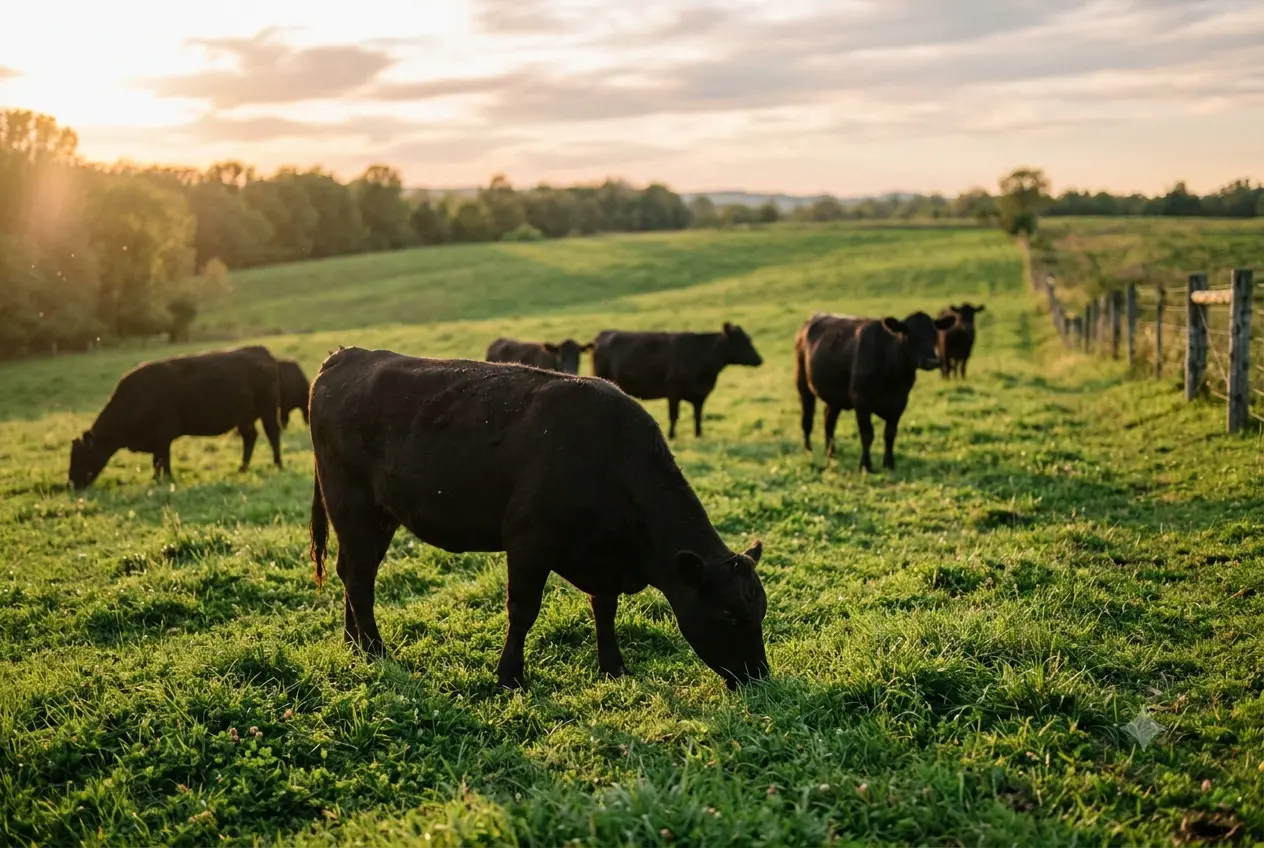
Angus cattle are valued for excellent marbling, good fertility, calving ease, and strong adaptability to temperate climates.
Originally from Scotland, Angus (typically black, occasionally red) is one of the most popular beef breeds globally, especially in the United States, Australia, and parts of Europe. Angus beef is closely associated with high marbling and tenderness, which supports premium branded beef programs. Angus cattle are naturally polled (hornless), which simplifies handling, and cows generally calve easily. They perform best in temperate climates with reliable pasture; in very hot, humid, or tick-heavy regions they often need to be crossed with more heat-tolerant breeds.
2. Hereford
Hereford cattle are hardy, docile, and efficient grazers, well suited to varied climates and lower-input pasture systems.
Recognizable by their red bodies and white faces, Herefords are known for a calm temperament, strong maternal instincts, and good foraging ability on modest pasture. They are widely used both as a straight breed and in crossbreeding programs, where “black baldy” (Angus-Hereford) calves are common and popular for their hybrid vigor. Herefords tolerate a range of climates reasonably well, though, like Angus, they are less heat- and tick-tolerant than tropical breeds.
3. Charolais
Charolais cattle are large-framed, fast-growing, and produce a high percentage of lean muscle, making them a strong terminal-sire breed.
Originating in France, Charolais cattle are white or cream-colored and known for rapid growth and heavy muscling. They are frequently used as terminal sires crossed onto smaller-framed cows to boost calf weaning weights and carcass muscle yield. Because calves from Charolais bulls tend to be larger at birth, calving ease should be considered carefully, particularly with first-time heifers.
4. Limousin
Limousin cattle are known for a high dressing percentage, lean, well-muscled carcasses, and efficient feed conversion.
Also French in origin, Limousin cattle are typically golden-red and prized in the meat industry for yielding a high proportion of usable meat relative to live weight. They are often crossed with British breeds such as Angus or Hereford to combine muscling with marbling and easier handling, since purebred Limousin can be more highly strung than some other breeds.
5. Brahman
Brahman cattle are the standout choice for hot, humid, and tick-prone regions due to their heat tolerance and natural parasite resistance.
Identifiable by a large hump and loose skin, Brahman cattle (developed from Indian zebu breeds) tolerate heat, humidity, and external parasites far better than most European breeds. They are widely used across the tropics, including parts of Africa, South America, and northern Australia, either as a straight breed or as a foundation for heat-tolerant composite breeds. Meat quality on its own is generally considered lower than Angus or Charolais, which is why Brahman is frequently crossed with British or Continental breeds to balance hardiness with carcass quality.
6. Brangus and Other Composite Breeds
Composite breeds like Brangus (Brahman x Angus) combine heat tolerance with improved meat quality, offering a practical middle ground for warmer climates.
Composite and stabilized crossbred breeds were developed specifically to capture the best of both parent breeds. Brangus, for example, aims to combine Brahman’s heat and parasite tolerance with Angus marbling and temperament. Similar composite approaches exist in other regions and are worth investigating where purebred temperate breeds are not well suited to local conditions.
7. Indigenous and Regional Breeds (Africa-Relevant Options)
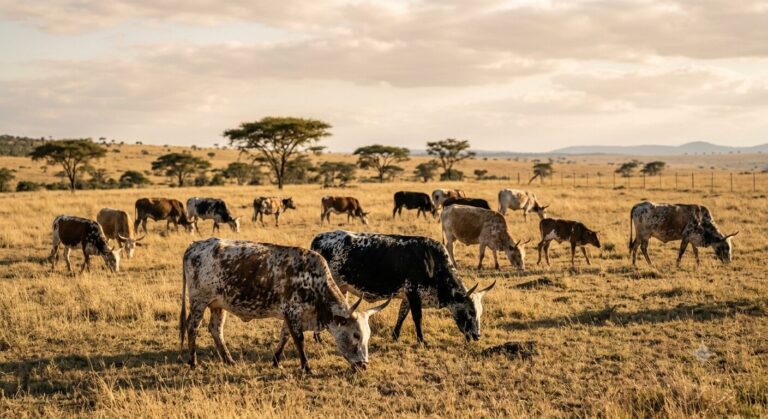
Indigenous breeds such as Boran (East Africa) and Nguni (Southern Africa) offer strong disease resistance, drought tolerance, and low input requirements, making them practical choices for many African small-scale and commercial systems.
In regions with limited veterinary access, variable rainfall, or extensive grazing systems, indigenous and locally adapted breeds often outperform imported temperate breeds on cost-effectiveness, even if their average growth rate is slower. Boran cattle are widely used in East African beef production for their hardiness and reasonable carcass quality, while Nguni cattle in Southern Africa are valued for fertility, disease resistance, and survivability under harsh conditions. Farmers in these regions frequently crossbreed indigenous cattle with Brahman, Angus, or Charolais to improve growth rate and carcass traits while retaining adaptability.
Breed Comparison Table
The table below summarizes general tendencies. Actual performance varies with nutrition, management, and individual animal genetics.
| Breed | Growth Rate | Meat Quality | Climate Adaptability | Best Suited For |
|---|---|---|---|---|
| Angus | Good | Excellent marbling | Temperate | Premium beef markets, temperate pasture systems |
| Hereford | Moderate–Good | Good | Temperate, moderate ranges | Low-input pasture systems, crossbreeding |
| Charolais | Excellent | Lean, well-muscled | Temperate to moderate | Terminal-sire crossbreeding, fast finishing |
| Limousin | Good | High dressing percentage, lean | Temperate to moderate | Carcass yield-focused systems |
| Brahman | Moderate | Moderate | Excellent in heat/humidity | Tropical and subtropical regions |
| Brangus | Good | Good | Good in warm climates | Warm-climate systems wanting better carcass quality |
| Boran / Nguni | Moderate | Moderate | Excellent in arid/variable climates | Small-scale and extensive African systems |
How to Choose a Breed for Your Farm
Match the breed to your climate, pasture quality, water access, veterinary support, and target market before considering growth rate or meat quality alone.
A breed that performs exceptionally well in a research trial or on a commercial ranch with high-quality pasture and full veterinary support may underperform, or even fail, on a small farm with limited inputs. Consider the following before deciding:
- Climate: Hot, humid, or tick-prone areas generally favor Brahman, Brangus, or indigenous breeds over purebred European cattle.
- Pasture and feed availability: Fast-growing, large-framed breeds like Charolais need consistent, quality nutrition to express their genetic potential; on poor pasture they may underperform relative to hardier breeds.
- Water access: Larger-framed, faster-growing cattle typically require more water; confirm reliable access before committing to a high-growth breed.
- Veterinary access: Breeds with lower natural disease resistance need more consistent veterinary and vaccination support.
- Target market: Export markets and premium butcheries may pay more for specific breeds or crosses; local or informal markets may prioritize live weight over breed.
- Handling infrastructure and experience: Some breeds are more strongly built or excitable and require sturdier handling facilities.
These considerations connect closely to broader herd management decisions, which are covered in more detail in a general guide to beef cattle farming for beginners.
Crossbreeding for Better Meat Production
Crossbreeding combines complementary traits from two or more breeds, often producing calves with better growth, hardiness, or fertility than either parent breed alone, a benefit known as hybrid vigor.
Many commercial beef operations do not run purebred herds at all. Instead, they crossbreed strategically, for example:
- Brahman cows crossed with Angus or Charolais bulls to combine heat tolerance with improved growth and meat quality.
- Hereford and Angus crosses (“black baldies”) combining calving ease, docility, and marbling.
- Indigenous African breeds crossed with Brahman or Continental breeds to boost growth while retaining local adaptability.
Crossbreeding programs require planning to avoid unwanted extremes, such as calves too large for smaller-framed cows to deliver safely. Farmers considering crossbreeding should seek guidance from a livestock extension officer, breed society, or experienced local breeder before selecting bulls.
Common Mistakes When Choosing a Beef Breed
- Choosing a breed based on appearance or trend alone, without checking suitability for local climate and pasture.
- Ignoring climate and disease pressure, leading to poor growth, high mortality, or heavy veterinary costs.
- Overestimating available pasture and water, especially with large-framed, fast-growing breeds.
- Underestimating handling requirements for larger or more excitable breeds.
- Failing to check local market preferences before investing in a specific breed or cross.
Frequently Asked Questions
What is the best beef cattle breed for beginners?
There is no universal “best” breed for beginners; the right choice depends on local climate and available support. Hereford and Angus are commonly recommended in temperate regions for their calm temperament and manageability, while Brahman crosses or indigenous breeds are often more practical starting points in hot or tropical regions.
Which beef breed grows the fastest?
Charolais is generally considered one of the fastest-growing beef breeds, along with other large-framed Continental breeds, provided nutrition and management are adequate to support that growth.
Which cattle breed is best for hot climates?
Brahman and Brahman-influenced breeds such as Brangus are best suited to hot, humid climates due to their natural heat tolerance and resistance to ticks and other parasites. Indigenous breeds such as Boran and Nguni also perform well in hot, variable climates.
Is crossbred or purebred cattle better for meat production?
Crossbred cattle often outperform purebreds in overall productivity because crossbreeding can combine strengths such as hardiness and meat quality while offsetting individual breed weaknesses. Purebreds remain valuable for maintaining consistent genetics and for breeding programs.
Can small-scale farmers raise premium beef breeds like Angus?
Yes, but success depends on climate suitability and access to adequate pasture, water, and veterinary support. In climates that do not suit Angus well, a Brahman-Angus cross or a locally adapted breed may produce better results with fewer losses.
How many beef cattle breeds are there worldwide?
There are dozens of recognized beef cattle breeds worldwide, along with numerous regional and composite breeds developed for specific climates and production systems. This article focuses on the breeds most commonly raised for commercial and small-scale meat production.
Does breed alone determine meat quality?
No. While breed strongly influences traits like marbling potential and muscling, nutrition, age at slaughter, handling, and management also significantly affect final meat quality.
Conclusion
There is no single “best” beef cattle breed for every farmer. Angus and Hereford suit temperate, moderate-input systems focused on meat quality and manageability. Charolais and Limousin excel where fast growth and lean muscling are priorities. Brahman, Brangus, and indigenous breeds like Boran and Nguni are better matches for hot, humid, or resource-limited environments, particularly across much of Africa.
The most reliable approach is to start with your own farming conditions, climate, pasture, water, veterinary access, and target market, and choose a breed or cross that fits those realities rather than chasing a breed’s reputation alone. For guidance on getting a beef cattle operation off the ground, including budgeting and infrastructure planning, see the companion guide on beef cattle farm startup costs, and for a broader introduction to the sector, the pillar guide to beef cattle farming for beginners.