Common Poultry Diseases and How to Prevent Them
Disease outbreaks are one of the fastest ways a poultry farm can lose money. A flock that looked healthy last week can suddenly stop eating, drop egg production, or start dying within days. For beginner farmers across Nigeria, Ghana, Kenya, Cameroon, and Uganda, understanding the most common poultry diseases — and building simple prevention habits — is often more valuable than knowing how to treat sickness after it appears.
The most common poultry diseases affecting small and medium-scale flocks in Sub-Saharan Africa include Newcastle disease, infectious bronchitis, coccidiosis, fowl typhoid, fowl pox, and infectious bursal disease (Gumboro). Most of these are prevented through good biosecurity, proper vaccination schedules, clean housing, and quick isolation of sick birds — not through treatment after the fact.
Table of Contents
- Why Disease Prevention Matters More Than Treatment
- Common Poultry Diseases: Symptoms and Risks
- Biosecurity Basics Every Farm Needs
- Vaccination: What Beginners Should Know
- How to Spot a Sick Bird Early
- What to Do When a Bird Gets Sick
- Seasonal and Climate-Related Disease Risks
- When to Call a Veterinarian
- Frequently Asked Questions
Why Disease Prevention Matters More Than Treatment
Poultry diseases spread fast in flocks kept close together, and by the time symptoms are obvious, the disease has often already spread to many birds — making prevention far cheaper and more effective than treatment.
Chickens live in close contact with each other, sharing feeders, drinkers, litter, and air space. This makes poultry farms especially vulnerable to rapid disease spread. A single infected bird brought into a flock, or a visitor who walked through another farm before yours, can trigger an outbreak that affects the entire house within days.
Treatment after an outbreak is often expensive, unreliable, and sometimes too late , some viral diseases have no effective treatment at all, only supportive care. This is why experienced farmers focus most of their effort on prevention: clean housing, controlled farm access, proper vaccination, and daily observation.
Common Poultry Diseases: Symptoms and Risks
Newcastle disease, coccidiosis, fowl typhoid, infectious bronchitis, fowl pox, and Gumboro disease are among the most frequently reported poultry health problems on small and medium farms in the region, each with distinct warning signs.
The table below summarizes key diseases beginners should be able to recognize. This is general educational information, not a diagnostic tool, always involve a qualified veterinarian or animal health officer to confirm any suspected disease.
| Disease | Type | Common Signs | Notes |
|---|---|---|---|
| Newcastle Disease | Viral | Twisted neck, gasping, drop in egg production, greenish diarrhea, sudden deaths | Highly contagious; vaccination is the main prevention method |
| Coccidiosis | Parasitic | Bloody droppings, huddling, ruffled feathers, poor growth | Common in young birds kept on damp litter; linked to poor litter management |
| Fowl Typhoid | Bacterial | Pale comb, yellow-green droppings, drop in appetite, increased mortality | Can spread through contaminated feed, water, or equipment |
| Infectious Bronchitis | Viral | Coughing, sneezing, watery eyes, drop in egg quality | Spreads quickly through air; affects respiratory system |
| Fowl Pox | Viral | Wart-like lesions on comb, wattle, and skin; sores in the mouth (wet form) | Spread by mosquitoes and direct contact; vaccination available |
| Infectious Bursal Disease (Gumboro) | Viral | Depression, ruffled feathers, whitish diarrhea, sudden death in young birds | Affects the immune system, making birds vulnerable to other infections |
Symptoms can overlap between diseases, and stress, poor nutrition, or parasites can make birds more vulnerable to multiple problems at once. Never rely on symptoms alone to diagnose a flock, a proper diagnosis usually requires a trained animal health worker, and sometimes laboratory testing.
Biosecurity Basics Every Farm Needs
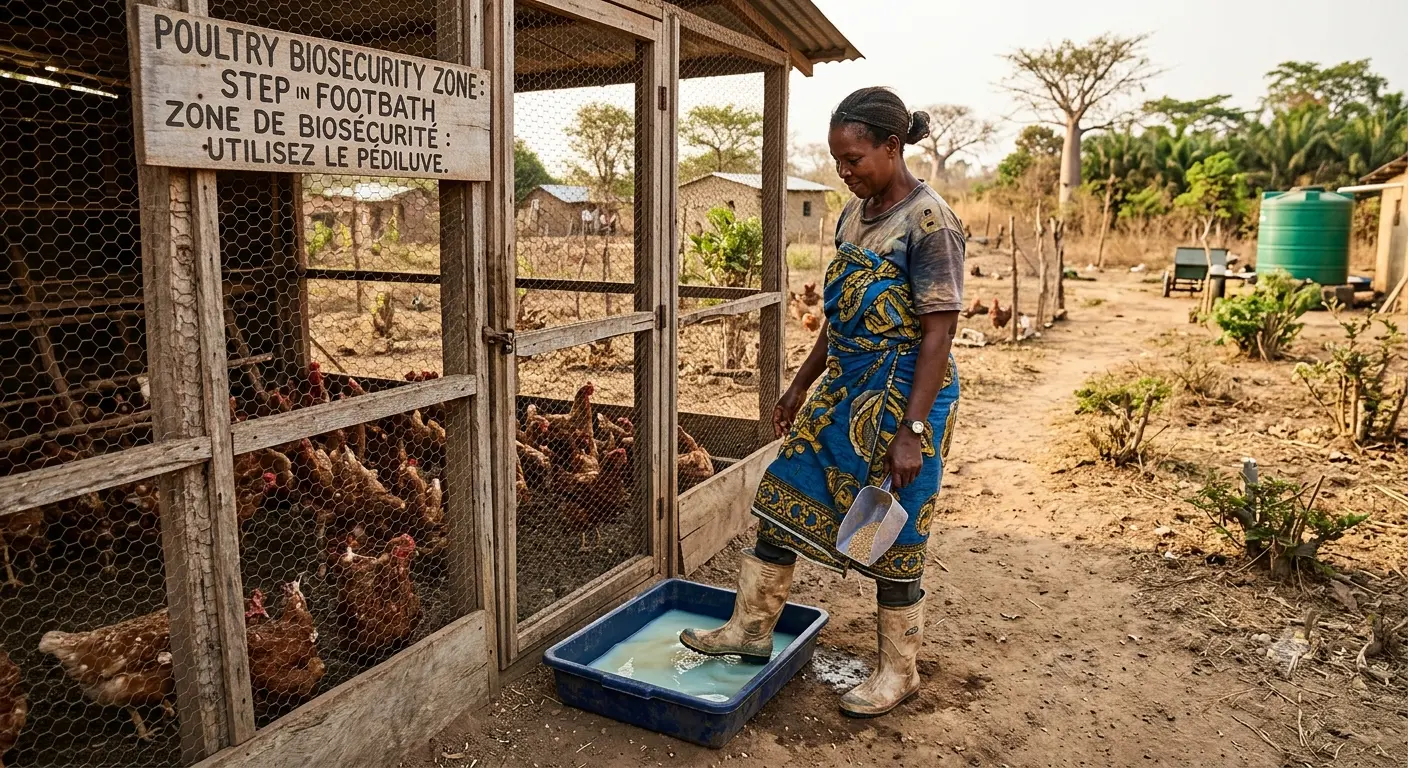
Biosecurity means controlling what enters and moves around your farm — people, vehicles, equipment, and other animals — to reduce the chance of introducing disease.
Most disease outbreaks on small farms trace back to something (or someone) entering the farm carrying pathogens. Practical biosecurity steps that fit small and medium-scale operations include:
- Limit visitor access — avoid letting unnecessary visitors walk through your poultry house, especially people who keep their own birds
- Use footbaths — place a disinfectant footbath at the entrance of each poultry house and use it consistently, not occasionally
- Separate new birds — quarantine newly purchased birds away from your existing flock for at least 1–2 weeks before introducing them
- Control other animals — keep dogs, cats, rodents, and wild birds away from feed stores and poultry houses, since they can carry disease
- Clean equipment between batches — feeders, drinkers, and housing should be cleaned and, where possible, disinfected between flocks
- Dedicate farm clothing and boots — use boots and clothing that stay on the farm rather than moving between multiple poultry sites
None of these steps require expensive equipment. They require consistency — biosecurity fails when it is only followed some of the time.
Vaccination: What Beginners Should Know
Vaccination against diseases like Newcastle disease and Gumboro is one of the most effective prevention tools available, but exact vaccines, schedules, and availability vary by country, so beginners should confirm their local schedule with a veterinarian or livestock extension officer rather than following a generic timetable.
Vaccination programs differ across Nigeria, Ghana, Kenya, Cameroon, and Uganda based on locally circulating disease strains, available vaccine types, and national livestock health guidelines. Because of this, this guide will not provide a fixed vaccination calendar. Instead, beginners should:
- Contact a local veterinary office, agricultural extension service, or reputable hatchery to get the current recommended schedule for your area and bird type (broiler, layer, or backyard flock)
- Buy vaccines only from trusted suppliers and keep them stored exactly as instructed, since many poultry vaccines require refrigeration and lose effectiveness if mishandled
- Vaccinate healthy birds only — vaccinating sick or stressed birds can be less effective and, in some cases, harmful
- Keep simple written records of vaccination dates and batches so you can track flock history and identify any recurring issues
Vaccination reduces risk but does not eliminate it entirely. It should always be combined with good biosecurity and hygiene, not used as a replacement for them.
How to Spot a Sick Bird Early
Early warning signs include reduced feed or water intake, isolation from the flock, ruffled feathers, drooping wings, unusual droppings, and a drop in egg production — catching these early allows faster isolation and response.
Daily observation is one of the simplest and most effective disease-control habits a farmer can build. Spend a few minutes each day watching your birds, ideally during feeding, when differences in behavior are easiest to notice. Warning signs to watch for include:
- A bird standing apart from the rest of the flock or reluctant to move
- Reduced appetite or birds ignoring feed and water
- Ruffled feathers, drooping wings, or a hunched posture
- Changes in droppings — watery, bloody, or unusually colored stool
- Coughing, sneezing, or nasal discharge
- A sudden, unexplained drop in egg production in layers
- Pale or discolored comb and wattles
A single sick bird does not always mean an outbreak, but ignoring early signs is one of the most common reasons small problems become large ones.
What to Do When a Bird Gets Sick
Quick answer: Isolate the sick bird from the rest of the flock immediately, observe it closely, and contact a veterinarian or animal health officer for proper diagnosis and treatment guidance rather than guessing or self-medicating.
When you notice a sick bird, act quickly:
- Move the bird to a separate space away from the main flock to limit potential spread
- Avoid handling other birds immediately after touching a sick one, or wash your hands and change clothing/footwear in between
- Note the specific symptoms and when they started — this information helps a veterinarian diagnose the problem faster
- Contact a qualified veterinarian or local animal health officer rather than relying on guesswork or advice from unqualified sources
- Do not attempt to treat a suspected disease with medication, antibiotics, or dosages without professional guidance, since incorrect treatment can worsen the bird’s condition, contribute to drug resistance, or leave harmful residues in meat or eggs
If multiple birds show similar symptoms at once, treat it as a potential outbreak and seek professional help immediately rather than waiting to see if it resolves on its own.
Seasonal and Climate-Related Disease Risks
Quick answer: Rainy seasons increase the risk of coccidiosis and other conditions linked to damp litter, while hot, dry seasons can increase heat stress, which weakens immunity and makes birds more vulnerable to infection.
Climate plays a real role in disease risk across the region. During rainy seasons, wet litter creates ideal conditions for coccidiosis and other parasites, so litter management — keeping bedding dry and replacing it regularly — becomes especially important. During hot, dry periods, heat stress can suppress a bird’s immune response, making it more susceptible to infections it might otherwise resist. Providing shade, adequate ventilation, and constant access to clean water helps reduce heat-related vulnerability. These are general patterns; actual risk varies by specific location, housing design, and flock density.
When to Call a Veterinarian
Call a veterinarian or animal health officer immediately if you see sudden or unexplained deaths, multiple birds showing the same symptoms, or signs of a disease that could spread quickly, such as respiratory distress or neurological symptoms like twisted necks.
Some situations should never be handled without professional input:
- Sudden deaths with no clear cause, especially multiple deaths within a short period
- Several birds showing similar symptoms at the same time
- Neurological signs such as twisted neck, tremors, or loss of coordination
- Severe respiratory distress, such as open-mouth breathing or persistent coughing across the flock
- Any suspected disease that is notifiable under your country’s animal health regulations
Delaying professional help in these situations often allows a disease to spread further and increases both bird losses and financial risk.
Frequently Asked Questions
What is the most common poultry disease in small-scale farms?
Newcastle disease and coccidiosis are among the most frequently reported problems on small and medium-scale poultry farms in Sub-Saharan Africa, though the specific risk depends on local conditions, vaccination coverage, and farm management practices.
Can poultry diseases spread to humans?
A small number of poultry diseases can pose risks to human health, which is why basic hygiene such as hand washing after handling birds or cleaning coops is important. If you have specific health concerns, especially around diseases with known zoonotic potential, consult a public health or veterinary professional in your area.
How often should I vaccinate my chickens?
Vaccination frequency depends on the specific vaccine, the disease being targeted, and local disease pressure, and it varies by country. Confirm the correct schedule with a local veterinarian, hatchery, or agricultural extension officer rather than using a generic timetable.
Is it safe to eat eggs or meat from a flock that has had disease?
This depends on the specific disease, treatment used, and any required withdrawal periods for medication. Always follow guidance from a veterinarian or relevant food safety authority rather than assuming it is safe.
Can I treat sick chickens myself with antibiotics?
Self-medicating without a proper diagnosis is not recommended. Incorrect treatment can worsen the bird’s condition, contribute to antibiotic resistance, and create food safety risks. Diagnosis and treatment decisions should involve a qualified veterinarian or animal health officer.
How do I know if it’s coccidiosis or something else?
Bloody droppings and huddling in young birds are common signs of coccidiosis, but similar symptoms can appear with other conditions. A veterinarian or animal health officer can confirm the cause, sometimes through simple field observation or laboratory testing.
What is the cheapest way to prevent poultry disease?
Consistent, low-cost biosecurity habits — footbaths, limiting visitor access, cleaning equipment between flocks, and quarantining new birds — are among the most cost-effective prevention measures, often more impactful per dollar spent than treatment after an outbreak.
Conclusion
Most poultry disease outbreaks are preventable, not inevitable. The farms that lose the fewest birds are usually not the ones with the most expensive equipment, but the ones with the most consistent daily habits — clean housing, controlled farm access, a proper vaccination schedule confirmed with a local professional, and close daily observation of the flock. When something does look wrong, isolating the affected bird quickly and involving a veterinarian early gives you the best chance of protecting the rest of your flock and your investment.
Build these habits from day one, even on a small backyard flock, since prevention only works when it becomes routine rather than an occasional effort.