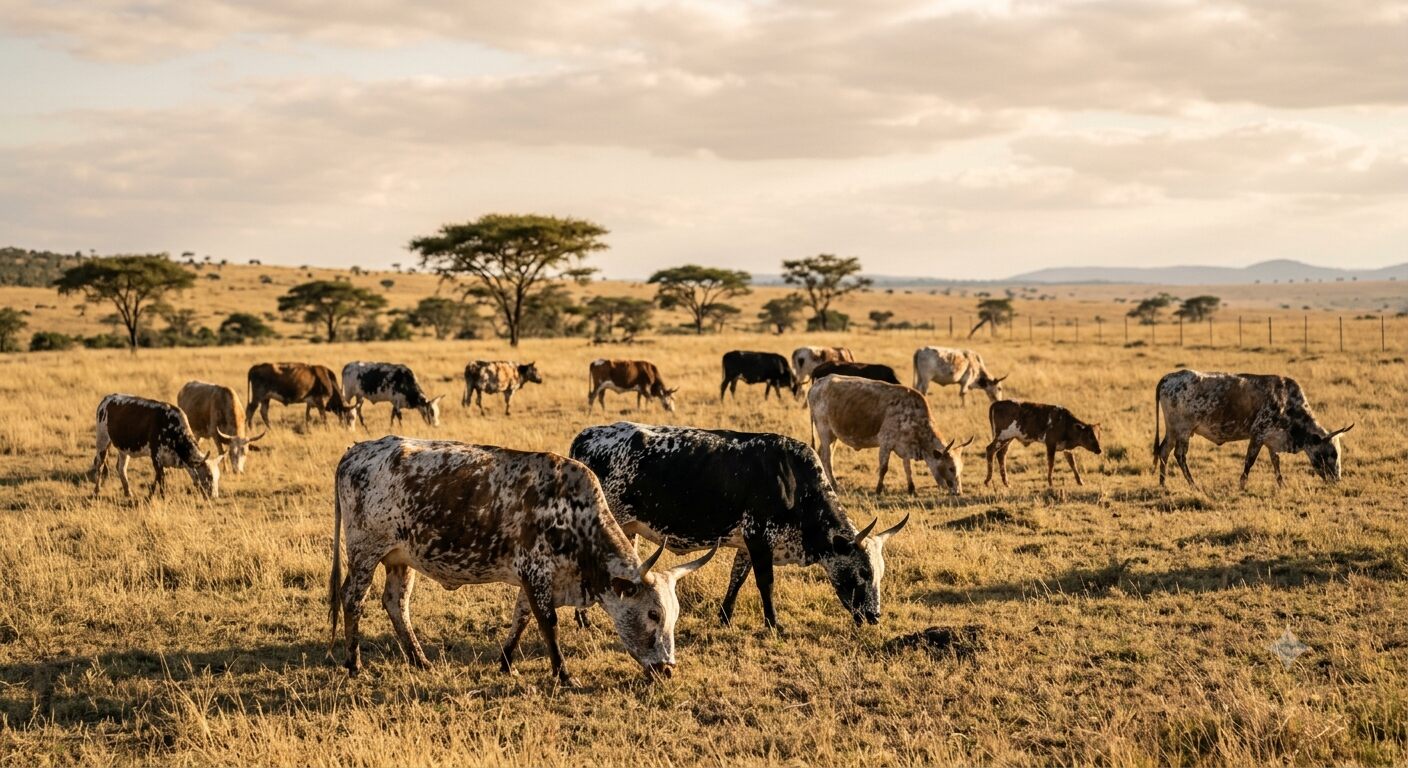
Beef Cattle Farming for Beginners: Complete Guide
Starting a beef cattle farm looks simple from the outside: buy some cattle, let them graze, sell them later. In practice, the farmers who struggle are usually the ones who skipped the planning stage — buying cattle before checking whether their land, water, and market could actually support them.
To start beef cattle farming, you need suitable land with enough grazing capacity, a reliable water source, a cattle breed adapted to your climate, basic housing and fencing, a realistic feeding plan, and a herd health routine that includes vaccination and parasite control. Profitability depends on controlling feed costs and having access to a buyer before you scale up.
This guide covers the practical decisions a beginner needs to make before and after buying their first cattle, with particular attention to conditions common in African farming regions alongside general principles that apply more broadly.
Table of Contents
- Getting Started with Beef Cattle Farming
- Choosing the Right Cattle Breeds
- Housing and Infrastructure
- Feeding and Nutrition
- Cattle Health and Management
- Costs and Profitability
- Sustainable and Small-Scale Practices
- Frequently Asked Questions
Getting Started with Beef Cattle Farming
Before buying any cattle, assess your land’s grazing capacity, confirm a dependable water supply, research who will actually buy your cattle, and work out how much starting capital you realistically have.
It’s tempting to start with the exciting part — picking a breed and buying animals. But the four questions below decide whether the farm survives its first year:
- Land: How many hectares do you have, and how many cattle can that land support without overgrazing? Carrying capacity varies enormously by rainfall and soil quality, so a figure that works in one region may be unrealistic in another.
- Water: Cattle need consistent access to clean water daily. Confirm your source won’t dry up seasonally, or plan for supplementary water storage.
- Markets: Identify where you will actually sell — a local abattoir, live cattle market, or individual buyers — before you commit to a herd size.
- Capital: Budget for the animals themselves, fencing, basic shelter, feed reserves for the dry season, and veterinary costs. Underestimating dry-season feed costs is one of the most common beginner mistakes.
Choosing the Right Cattle Breeds
Choose a breed based on your local climate, available feed, and target market, not just on which breed produces the “best” beef — a high-performing breed that cannot tolerate your conditions will underperform a hardier, better-adapted one.
| Breed | Strengths | Best For |
|---|---|---|
| Hereford | Hardy, good beef quality | Temperate regions |
| Brahman | Heat tolerant, disease resistant | Tropical climates |
| Angus | High marbling, premium beef | Commercial beef markets |
| Nguni | Adapted to African conditions, low input needs | Small-scale African farms |
In many parts of Sub-Saharan Africa, indigenous or adapted breeds such as Nguni or Boran often outperform imported breeds on smallholder farms, since they tolerate heat, ticks, and lower-quality forage better. Crossbreeding is common where farmers want faster growth rates while keeping some of the hardiness of local breeds. A local livestock extension officer or experienced regional farmer is the best source for confirming which breeds actually thrive in your specific area.
Housing and Infrastructure
Beef cattle need simple, well-ventilated shelter from extreme weather, secure fencing to control grazing and prevent losses, and a handling facility for vaccinating, treating, and weighing animals safely.
Unlike poultry or pigs, beef cattle do not need elaborate housing. The essentials are:
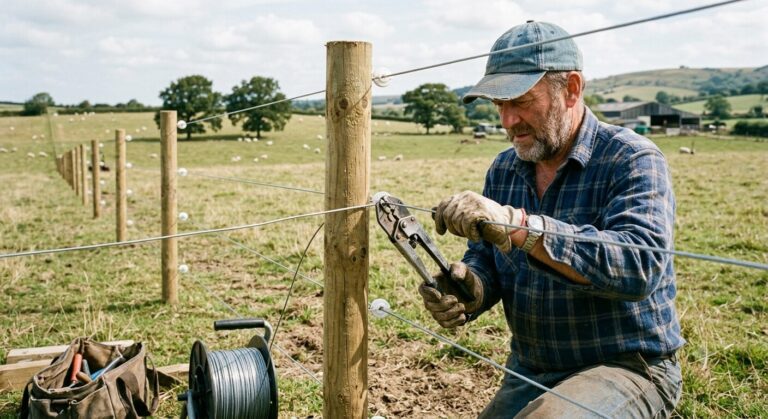
- Fencing: Needed both to protect crops from cattle and to allow rotational grazing (explained further below). Electric or barbed wire fencing is common; the right choice depends on budget and predator risk.
- Water troughs or dams: Positioned so cattle don’t have to walk excessively far, which wastes energy and can lower weight gain.
- Handling facilities: A basic crush or chute makes vaccination, deworming, and weighing far safer for both the animals and the farmer. Trying to treat cattle without proper restraint is a common cause of injury.
- Shade and windbreaks: Even without a full barn, trees, simple shade structures, or windbreak fencing reduce heat stress, which directly affects weight gain in hot climates.
Feeding and Nutrition
Most beef cattle diets are based on pasture grazing supplemented with hay or silage during dry seasons, and concentrate feed when fattening cattle for market; the right balance depends on your grazing quality and target sale weight.
Main feeding systems
- Pasture grazing: The lowest-cost and most sustainable option where grazing land is available year-round or seasonally supplemented.
- Silage and hay: Conserved forage used to bridge dry seasons when pasture quality drops. Planning ahead to make or buy enough hay before the dry season begins is critical — running short mid-season is a common and costly mistake.
- Concentrates: Higher-energy feed used in the final months before sale to increase weight gain and finish cattle for market, particularly for commercial buyers who pay more for well-finished animals.
Cattle need adequate energy, protein, minerals, and vitamins, and mineral supplementation (particularly salt licks) is often overlooked on smallholder farms despite being inexpensive and impactful. Feed represents the largest ongoing cost in most cattle operations, so tracking what you spend against weight gained is important for judging whether your feeding strategy is working.
Cattle Health and Management
Protect your herd through a regular vaccination schedule, consistent tick and worm control, basic biosecurity measures, and record-keeping, and always involve a qualified veterinarian for diagnosis and treatment decisions rather than guessing.
Core health practices
- Vaccination: Required and recommended vaccines differ by country and region, often depending on local disease risk (such as foot-and-mouth disease, anthrax, or blackleg in various parts of Africa). Confirm current vaccination schedules with your local veterinary service rather than relying on a generic list, since requirements and available vaccines change.
- Parasite control: Ticks and internal worms are major productivity drains in many tropical and subtropical regions. A consistent dipping, spraying, or deworming schedule, guided by a vet or extension officer, helps prevent both disease and weight loss.
- Biosecurity: Limiting contact between your herd and untested animals, quarantining new purchases, and controlling visitor access to grazing areas reduces disease introduction risk.
- Record-keeping: Track vaccinations, treatments, weight checks, and any illness by individual animal or group. This history is invaluable if a vet needs to diagnose a problem quickly. Our guide on [Suggested Internal Link: How to Keep Livestock Farm Records] covers this in more detail.
Never attempt to diagnose or treat serious symptoms such as sudden deaths, bleeding from body openings, or rapid illness spread across the herd without professional veterinary involvement — some of these can indicate reportable diseases with legal notification requirements in many countries.
Costs and Profitability
Profitability in beef cattle farming depends on keeping feed and veterinary costs proportionate to your herd size, timing sales to match market demand, and avoiding overstocking land beyond its grazing capacity.
| Category | Examples |
|---|---|
| Fixed costs | Land, fencing, housing, handling facilities |
| Variable costs | Feed, veterinary care, labor, water |
| Revenue | Sale of beef, live cattle, hides, manure |
Cattle farming ties up capital for a long period — typically 18 to 24 months from calf to market weight — so cash flow planning matters as much as overall profitability. Farmers who overstock their land relative to its grazing capacity often see the cost show up later, in the form of degraded pasture, slower weight gain, and higher supplementary feed bills.
Sustainable and Small-Scale Practices
Rotational grazing, water conservation, and integrating cattle with crop farming help small-scale farmers protect their land’s long-term productivity while reducing input costs.
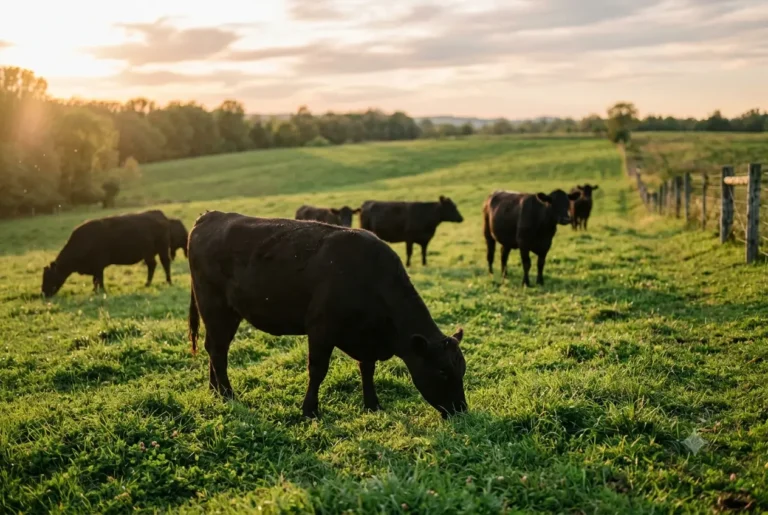
- Rotational grazing: Moving cattle between paddocks prevents any single area from being overgrazed, allowing pasture to recover and supporting more stable long-term yields.
- Rainwater harvesting: Especially valuable in regions with distinct dry seasons, reducing dependence on distant or unreliable water sources.
- Manure use for crop fertilization: Integrating cattle and crop production allows manure to reduce fertilizer costs while improving soil health.
- Community veterinary services: In many rural areas, small-scale farmers share the cost of veterinary visits, vaccination campaigns, or dip tanks, making professional animal health support more affordable.
Frequently Asked Questions
How many cattle should a beginner start with?
Most beginners start with 5 to 20 head, depending on available land, water, and capital. Starting smaller allows you to learn herd management and confirm market access before committing to a larger operation.
Which breed is best for Africa?
Nguni and Brahman cattle are widely used across African farming systems because of their heat tolerance and resistance to local diseases and parasites, though the best choice still depends on your specific region and market goals.
How long does it take to raise beef cattle?
It typically takes 18 to 24 months to raise a calf to market weight, though this varies depending on breed, feeding system, and how quickly you want to finish the animal for sale.
Can cattle farming be profitable on a small scale?
Yes, small-scale cattle farming can be profitable if feed costs are controlled, the land is not overstocked, and a reliable local market for beef or live cattle exists before you scale up herd size.
Do I need a veterinarian?
Yes. Regular veterinary involvement is important for vaccination schedules, parasite control programs, and diagnosing illness. Attempting to manage serious health issues without professional guidance risks both animal welfare and farm profitability.
What is the biggest mistake beginner cattle farmers make?
Buying more cattle than the land can support, or underestimating dry-season feed costs, are among the most common early mistakes. Both problems are usually avoidable with realistic planning before purchasing animals.
Do I need to fence my grazing land?
In most systems, yes. Fencing protects crops and neighboring land from stray cattle, allows rotational grazing to protect pasture quality, and reduces the risk of losing animals to theft or predators.
Conclusion
Beef cattle farming rewards patience and planning more than any single decision about breed or equipment. Assess your land, water, and market realistically before buying animals, choose a breed suited to your actual conditions rather than the most popular one, and build a consistent health and feeding routine from day one.
Start small, track your costs and herd performance closely, and adjust as you learn what works on your specific land.