Backyard Chicken Farming Guide for Beginners in the United States
There’s a particular kind of magic in walking out to your backyard, coffee in hand, and collecting eggs still warm from the nest. It’s a small ritual, but for thousands of Americans who’ve taken up backyard chicken keeping in recent years, it’s become one of the most satisfying parts of their day. If you’ve been thinking about joining them, you’re not alone — and you’re not too late to start.
This guide walks you through everything you need to know before your first hen ever sets foot in your yard, from checking local laws to picking breeds, building coops, and handling the day-to-day care that keeps your flock happy and productive.
Table of Contents
- Why Backyard Chickens Have Become So Popular
- Before You Start: Legal and Practical Considerations
- Choosing the Right Chicken Breeds
- Coop and Run: What You Actually Need
- Feeding Your Flock Properly
- Daily and Seasonal Care
- Common Health Issues and Prevention
- Egg Production and Collection
- Predator-Proofing Your Setup
- Common Beginner Mistakes to Avoid
- Frequently Asked Questions
- Final Thoughts
Why Backyard Chickens Have Become So Popular
Over the past decade, backyard chicken keeping has quietly grown from a niche hobby into a mainstream lifestyle choice. Rising grocery prices, growing interest in where our food comes from, and a general pull toward self-sufficiency have all played a part.
But talk to anyone who actually keeps chickens, and the reasons go deeper than economics. Hens have personalities. They follow you around the yard, they squabble over pecking order, and they turn kitchen scraps into rich compost and fresh eggs. It’s a hobby that rewards patience and attention, and it teaches responsibility in a way that few other backyard projects do.
That said, chickens aren’t a “set it and forget it” pet. They need consistent care, a safe space, and an owner willing to learn as they go. This guide is designed to shortcut some of that learning curve.
Before You Start: Legal and Practical Considerations
Before you buy a single chick, check your local zoning laws. This step trips up more beginners than any other part of the process.
- City and county ordinances: Many municipalities allow hens but ban roosters due to noise complaints.
- HOA rules: If you live in a neighborhood with a homeowners association, review the covenants — some prohibit livestock of any kind, including chickens.
- Flock size limits: Cities like Los Angeles or Denver often cap the number of hens allowed per property, typically between 4 and 8.
- Setback requirements: Coops often need to be a minimum distance from property lines or neighboring homes.
A quick call to your city’s planning or animal control department will save you a lot of headaches. It’s also worth chatting with neighbors before you start — a heads-up goes a long way if a hen occasionally escapes into someone’s garden.
Choosing the Right Chicken Breeds
Not all chickens are created equal, and choosing the right breed for your climate, goals, and experience level makes a huge difference in how smooth your first year goes.
Best Breeds for Beginners
- Rhode Island Red: Hardy, reliable layers that tolerate both heat and cold well.
- Plymouth Rock: Calm, friendly, and known for consistent egg production.
- Australorp: Gentle temperament with some of the best egg-laying records around.
- Orpington: Docile and cold-hardy, great for families with kids.
Breeds to Consider by Climate
If you live somewhere with harsh winters, like Minnesota or upstate New York, look for cold-hardy breeds with smaller combs, since large combs are prone to frostbite. In hotter regions like Texas or Arizona, breeds with lighter feathering and larger combs handle heat dissipation better.
How Many Chickens Should You Start With?
Most experts recommend starting with at least three to four hens. Chickens are social animals and don’t do well alone, and a small starter flock gives you room to learn without becoming overwhelming.
Coop and Run: What You Actually Need
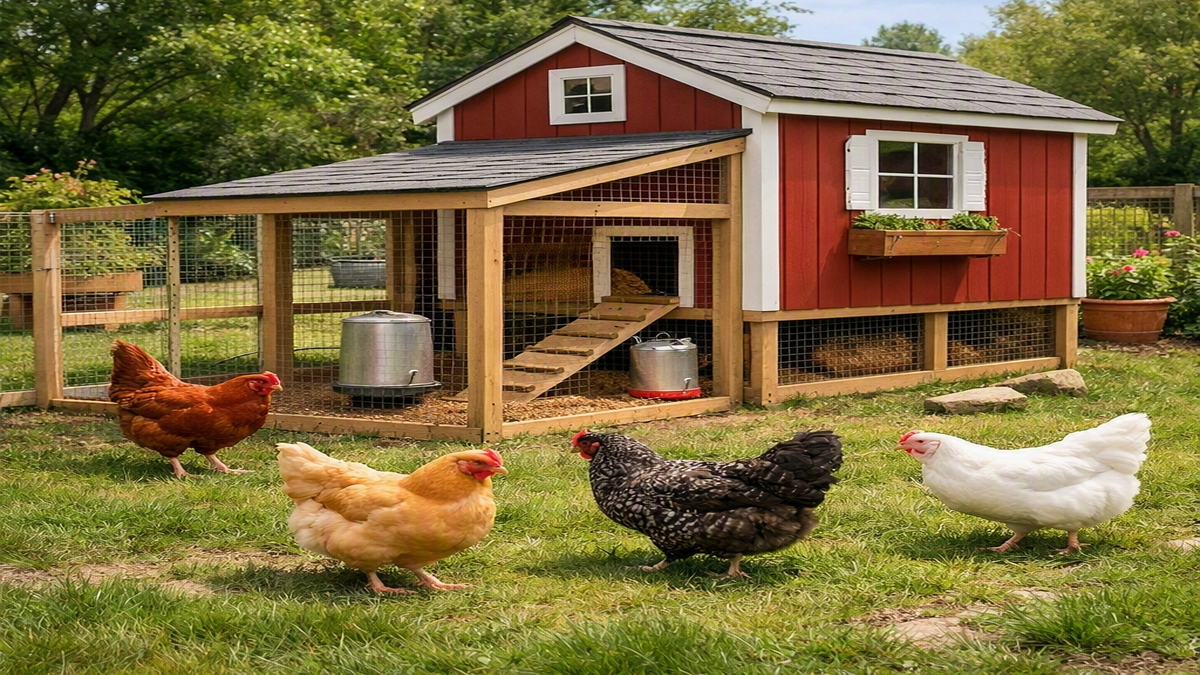
The coop is where your hens sleep and lay eggs, and the run is their fenced outdoor space. Getting the size and setup right early on prevents a lot of problems down the road.
Space Requirements
- Inside the coop: At least 3-4 square feet per bird.
- In the run: A minimum of 8-10 square feet per bird if they won’t be free-ranging.
- Nesting boxes: One box for every 3-4 hens, roughly 12×12 inches.
- Roosting bars: About 8-10 inches of bar space per bird, set higher than the nesting boxes.
Ventilation and Insulation
Good airflow matters more than most beginners expect. Poor ventilation leads to ammonia buildup from droppings, which can cause respiratory issues. At the same time, avoid sealing the coop too tightly in winter — chickens handle cold better than dampness or stale air.
DIY vs. Pre-Built Coops
You can build a coop from scratch using basic lumber and hardware cloth, buy a pre-fabricated kit, or repurpose an existing shed. Whatever route you choose, prioritize easy-to-clean surfaces and a secure latch system — raccoons are surprisingly good at figuring out simple locks.
Feeding Your Flock Properly
Nutrition directly affects egg production, feather health, and overall vitality, so it’s worth getting right from day one.
Feed by Life Stage
- Chicks (0-8 weeks): Starter feed with 18-20% protein.
- Pullets (8-18 weeks): Grower feed with slightly lower protein.
- Laying hens (18+ weeks): Layer feed with added calcium for strong eggshells.
Supplements and Treats
Kitchen scraps like vegetable peels, leftover grains, and fruit make great occasional treats. Avoid feeding chickens anything moldy, salty, or containing avocado skin and pits, onions in large amounts, or chocolate, all of which can be harmful.
Crushed oyster shell offered on the side gives hens extra calcium for eggshell strength, especially important for heavy layers.
Water
Fresh, clean water should always be available. In freezing climates, a heated waterer prevents the water from turning into a solid block overnight — a common and easily avoidable problem.
Daily and Seasonal Care
Chicken keeping has a rhythm to it once you settle in, but the routine shifts with the seasons.
Daily Tasks
- Open the coop door in the morning and close it at dusk.
- Check food and water levels.
- Collect eggs.
- Do a quick visual health check on each bird.
Weekly and Monthly Tasks
- Clean out bedding and refresh with fresh straw or pine shavings.
- Inspect fencing and coop for signs of wear or predator attempts.
- Deep clean nesting boxes.
Winter Care
Chickens are more cold-tolerant than most people assume, but frostbite on combs and wattles is a real risk. Petroleum jelly applied to combs on especially frigid nights offers some protection, and a draft-free (but ventilated) coop makes the biggest difference.
Summer Care
Heat stress is often more dangerous than cold for chickens. Provide shade, extra water stations, and consider frozen treats like watermelon on the hottest days to help them cool down.
Common Health Issues and Prevention
Most chicken health problems are preventable with clean living conditions and regular observation.
Common Issues
- Mites and lice: Regular dust baths and coop cleaning help prevent infestations.
- Respiratory infections: Usually linked to poor ventilation or ammonia buildup.
- Egg binding: A hen unable to pass an egg, often due to calcium deficiency or obesity.
- Bumblefoot: A bacterial infection in the foot pad, often from rough perches or wet bedding.
Keeping a small first-aid kit with antiseptic spray, gauze, and electrolyte powder on hand can help you respond quickly if something goes wrong. When in doubt, a poultry-experienced veterinarian is worth seeking out before you actually need one.
Egg Production and Collection
Most hens begin laying between 18 and 22 weeks old, depending on breed. Production peaks in the first two years and gradually declines afterward, though many hens continue laying occasionally well into their later years.
Factors That Affect Laying
- Daylight hours: Hens need roughly 14-16 hours of light to lay consistently, which is why production naturally slows in winter.
- Stress: Predator scares, sudden diet changes, or overcrowding can reduce egg output.
- Age: Older hens lay fewer eggs but often larger ones.
Collect eggs daily to keep them clean and to discourage broodiness or egg-eating habits from developing.
Predator-Proofing Your Setup
Depending on where you live, your flock may be at risk from hawks, raccoons, foxes, coyotes, or even neighborhood dogs. A secure setup is non-negotiable.
- Use hardware cloth (not chicken wire, which predators can tear through) for all openings.
- Bury fencing at least 12 inches underground to stop digging predators.
- Install secure, predator-proof latches — raccoons can open simple hook latches.
- Cover the run with netting or wire to block aerial predators like hawks.
Losing a hen to a predator is one of the hardest lessons new keepers learn, and unfortunately, it’s often preventable with the right precautions from the start.
Common Beginner Mistakes to Avoid
- Skipping the legal check: Getting chickens before confirming they’re allowed can lead to forced rehoming later.
- Underestimating space needs: Overcrowded coops lead to stress, pecking, and disease.
- Ignoring ventilation: A tightly sealed coop causes more harm than a cold one.
- Not predator-proofing early: Waiting until after an attack is too late.
- Mixing ages carelessly: Introducing new chicks to an established flock without a proper transition period often leads to bullying.
Frequently Asked Questions
Do I need a rooster to get eggs?
No. Hens lay eggs regardless of whether a rooster is present. Roosters are only necessary if you want fertilized eggs for hatching.
How much does it cost to start a backyard flock?
Initial setup, including a coop, run, feeders, and starter chicks, typically ranges from $300 to $1,000 depending on how much you build yourself versus buy pre-made.
How long do backyard chickens live?
With good care, backyard chickens often live 6-8 years, though some breeds can live longer.
Can chickens be kept in small urban yards?
Yes, many urban keepers successfully raise 3-4 hens in modest yards, as long as local ordinances allow it and space guidelines are followed.
What should I do with hens that stop laying?
Many keepers choose to keep older hens as pets or for pest control and composting help, since they still contribute to the flock’s social structure even after laying slows.
Final Thoughts
Starting a backyard flock is one of those projects that rewards you a little more each day you stick with it. The first few weeks involve a learning curve — figuring out feeding routines, predator-proofing your yard, and getting to know each hen’s personality — but most keepers will tell you it’s worth every bit of effort.
Take the time to plan your setup properly, choose breeds suited to your climate, and stay consistent with daily care. Do that, and you’ll likely find yourself, a few months from now, walking out to that coop each morning looking forward to what you’ll find.